
Table of Contents
- API 673: An Important Reference in Petrochemical Process Fans
- Major Process Fans and Blowers Used in Petrochemical Plants
- Process Gas Fan and Blower Design
- Fired Heater FD and ID Fans
- High Temperature Process Fans
- Materials and Condensation Management in Corrosive Gases
- Erosion and Rotor Wear in Particulate Gases
- Sealing and Hazardous Gases
- ATEX and Hazardous Area Requirements
- Ease of Split Casing and Maintenance
- Process Data Required for Petrochemical Fan Selection
- Frequently Asked Questions (FAQ)
- Conclusion
The transport of process gases in petrochemical plants is not a matter which can be solved simply by the choice of a fan providing the required flow rate and pressure. Temperature, chemical composition, pressure, particle content and hazardous area conditions of the gas; It directly determines the entire mechanical design, from the fan’s rotor to the sealing system.
Especially in refinery and petrochemical units, fans often operate under high temperature, corrosive or flammable gases and continuous operating conditions. Therefore, process fan and blower selection is a special engineering study in which process data and mechanical design are considered together.
API 673: An Important Reference in Petrochemical Process Fans
For special purpose centrifugal process fans in the petroleum, chemical and gas industries API 673 it is an important design and supply reference. The fan not only meets performance values; Rotor dynamics, mechanical integrity, vibration, bearing, shaft, body and auxiliary systems also need to be properly evaluated.
API 673 requirements ensure that design is handled beyond catalog capacity in critical process fans. Relevant project standards and specification requirements should also be evaluated according to the scope of application.
Major Process Fans and Blowers Used in Petrochemical Plants
- CCR Gas Blower — To ensure the circulation of process gas under high temperature and pressure conditions in Continuous Catalytic Reforming (CCR) units.
- Process Gas Fan / Blower — Transportation of process gases under certain flow rate and pressure conditions.
- Fired Heater FD Fan — Providing combustion air to furnace burners.
- Fired Heater ID Fan — Creating the necessary traction in the oven and chimney system.
- Flue Gas Fan — Transport of high temperature flue gases in process and emission systems.
- Incinerator Fan / Blower — Ensuring the necessary air or gas flow in waste gas combustion systems.
- Scrubber Fan — Transport of corrosive gases passing through washing systems.
- High Pressure Centrifugal Fan — Providing pressure increase in processes with high system resistance.
This article may interest you. What is EN 14986? Critical Requirements in ATEX Fan Design
Process Gas Fan and Blower Design
Flow rate alone is not sufficient data when choosing a Process Gas Fan or Blower. The molecular weight, suction and compression pressure, minimum-normal-maximum temperatures and chemical composition of the gas should be evaluated together.
As the temperature and pressure change, the gas density changes; Accordingly, the actual operating point and power requirement of the fan may also change. The presence of hydrocarbon, hydrogen, H₂S or other corrosive components directly affects material, sealing and hazardous area design.
Fired Heater FD and ID Fans
The functions of FD and ID fans are different in Fired Heater systems. While the FD fan feeds combustion air into the furnace, the ID fan helps in the controlled withdrawal of process gases.
In the selection of these fans, the furnace pressure balance, burner requirement, chimney and duct losses and operating temperature should be evaluated together. Thermal expansion on the high temperature side; It should be considered together with the rotor, shaft, bearing and sealing system.
High Temperature Process Fans
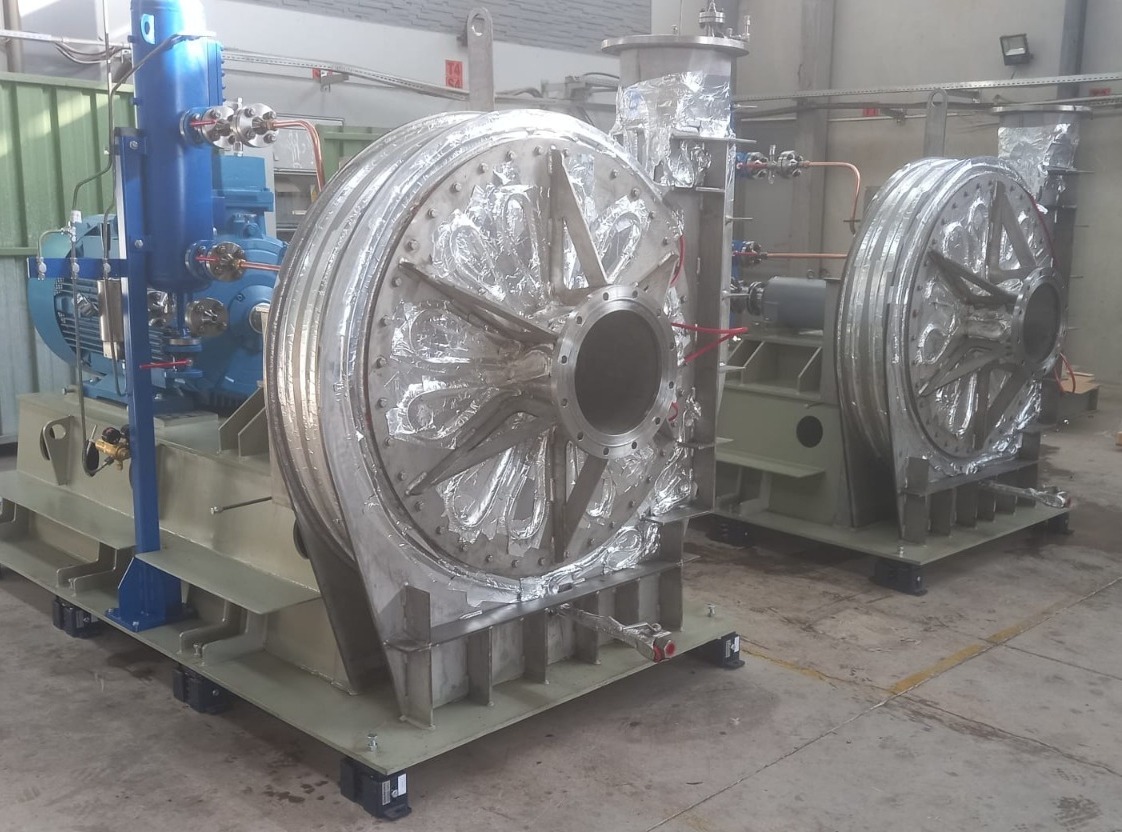
In high temperature fans, the design is not just about the temperature resistance of the material. Expansion of the rotor, shaft and body at different rates with temperature; It may affect openings, alignment and bearing loads during operation.
Therefore, bearing placement, shaft cooling, cooling disc, heat barriers and body expansion are evaluated according to the application. The aim is to maintain the necessary mechanical clearances between the rotor and the stationary parts when the fan reaches operating temperature.
Materials and Condensation Management in Corrosive Gases
In petrochemical processes, material selection should be based on the chemical composition of the gas and actual operating conditions. The formation of condensation, especially in gases containing moist and acidic components, can accelerate the corrosion mechanism.
Therefore, it is not enough to choose stainless steel alone. Appropriate material, surface protection and, if necessary, drainage pattern should be determined by assessing gas analysis, temperature, water content and dew point.
Erosion and Rotor Wear in Particulate Gases
In solid particulate-carrying process gases, rotor blades and snail inner surfaces may be subject to erosion. Particle size, concentration and gas velocity; These are the basic parameters that determine in which regions the wear will be concentrated.
In areas where wear is intense, appropriate material selection, replaceable wear plates or coatings suitable for application may be considered. Easy access to control and replacement of wear parts during maintenance should also be part of the design.
Sealing and Hazardous Gases
In flammable or toxic process gases, it is critical to keep leaks at shaft passages under control. Sealing system; It should be determined according to the composition, temperature, pressure and permissible leakage level of the gas.
Seal, maze type or different seal layouts can be evaluated according to the application requirement. Sealing design is not a separate issue from the mechanical design of the fan, but is part of process safety.
ATEX and Hazardous Area Requirements
Zone classification of the area where the fan is located in petrochemical plants and the suitability of the fan, motor and auxiliary equipment should be evaluated together. The risk of mechanical sparks on the fan side, material pairs, grounding and the associated protection concept should also be addressed according to project requirements.
ATEX requirement should not be evaluated solely on engine certification; The fan’s compatibility with process and field conditions as complete equipment should be checked.
Ease of Split Casing and Maintenance
Two-piece snail (split casing) design in large process fans is an important solution that can reduce maintenance time. Faster access to rotor and body internal surfaces; It facilitates cleaning, balance control, wear control and part replacement.
In continuously operating refinery and petrochemical units, determining the maintenance concept at the first stage of design helps to carry out planned stoppages in a more controlled manner.
Process Data Required for Petrochemical Fan Selection
- Chemical composition and molecular weight of the gas
- Minimum, normal and maximum flow rate
- Suction and compression pressures
- System pressure
- Minimum, normal and maximum temperature
- Moisture, condensation and dew point information
- Particulate content and corrosivity
- Hazardous area (Zone) classification
- Sealing requirement
- Material and corrosion requirements
- API 673 and project specification requirements
Frequently Asked Questions (FAQ)
Why is API 673 important in petrochemical plants?
API 673 is an important reference for systematically addressing the mechanical and operating requirements of special-purpose centrifugal process fans.
What is the difference between Process Gas Fan and standard industrial fan?
Process Gas Fan; It is designed taking into account gas composition, temperature, pressure, sealing and field conditions. Therefore, there may be different mechanical and material requirements from the standard fresh air fan.
Why is thermal expansion important in high temperature fans?
The movement of the rotor, shaft and body with temperature can affect the operating openings and bearing conditions. Therefore, thermal behavior is one of the fundamental parts of design.
Which sealing system should be used in petrochemical fans?
A single solution is not suitable for all applications. Seal type; It should be selected according to the composition, temperature, pressure and permissible leakage level of the gas.
Why is split casing preferred?
It provides quick access to rotor and fan interiors, helping to perform cleaning, checking and maintenance operations in less time.
Conclusion
The selection of process fans and blowers in petrochemical plants does not only consist of meeting flow rate and pressure values. Actual operating conditions of the gas, temperature, corrosion, particulate load, sealing, hazardous area classification and mechanical design should be evaluated together.
Considering API 673 and related project standards together with process requirements, especially in critical applications; It is a basic design approach in terms of reliable, controlled and long-term operation of the fan.
f you are looking for non-standard engineering solutions for your demanding petrochemical processes, completely specific to your facility and capacity; Efsan You can secure your project with ‘’s expert engineering staff. [Immediately with our Technical Team To contact Go through]
tags :
More about the sector and our business