Table of Contents
Managing volatile vapors and boil-off gas in industrial facilities requires more than just standard air movement equipment; it demands uncompromising safety and absolute leak tightness. Whether you are operating an LNG import terminal or a chemical processing plant, failing to properly capture, manage, and route these gases leads to significant energy losses and safety hazards. You are in the right place to understand the critical engineering specifications behind high-performance return gas blowers and how to select the optimal, streamlined solution for your vapor recovery infrastructure.
What is a Return Gas Blower and Why is it Critical?
A return gas blower is a specialized industrial compressor designed to safely capture, pressurize, and transport boil-off gas (BOG) or displaced vapors back into a containment system or a carrier ship during unloading operations.
In highly volatile environments, gases naturally vaporize due to heat leakages or pressure drops, creating Boil-Off Gas (BOG). A Return Gas Blower (RGB) acts as the heart of the vapor recovery unit (VRU).
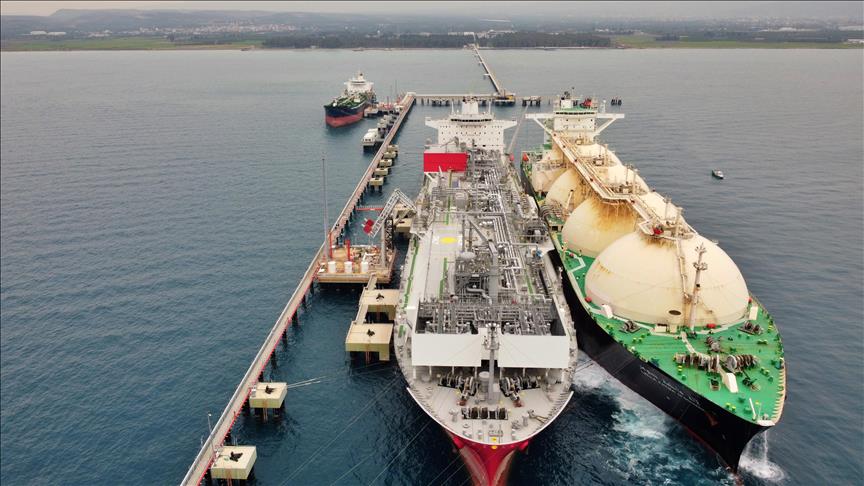
As LNG import terminals expand worldwide to strengthen energy security, LNG carriers regularly unload cargo into large storage tanks. During this process, vapor displaced from the terminal tanks must be returned safely to the ship to maintain tank pressure and allow continuous unloading. That is exactly the job of the RGB: moving large volumes of low-pressure boil-off gas between the terminal and the LNG carrier.
Based on decades of practical observation, the most common error in system design is treating a return gas blower like a standard air fan. Standard units lack the hermetic sealing and material resilience required for volatile organic compounds (VOCs) or cryogenic gases. Operating with hazardous gases means that even a microscopic leak can disrupt the entire facility’s safety protocol.
Engineering for Simplicity: Direct Drive and VFD Control
Modern return gas blowers optimize efficiency by prioritizing design simplicity, utilizing direct drive mechanisms without gearboxes, eliminating external lube oil systems, and replacing mechanical throttling with Variable Frequency Drive (VFD) speed control.
Moving displaced vapor is typically a relatively low-pressure ratio application. However, the design philosophy behind the equipment handling it can vary widely across the industry. When evaluating RGB solutions, engineers must ask a simple question: What if the application simply doesn’t require the complexity often seen in traditional turbomachinery?
A frequent situation encountered in the field is the over-engineering of vapor return lines with overly complex compressor systems. A design focused on simplicity yields significantly higher long-term reliability. By stepping back, the most elegant engineering solutions emerge:
- Direct drive implementation: Eliminating the gearbox reduces mechanical wear and potential failure points.
- No external lube oil system: Removing this requirement mitigates the risk of gas contamination and lowers maintenance overhead.
- VFD speed control: Using a Variable Frequency Drive instead of mechanical throttling provides precise, energy-efficient flow management tailored to real-time boil-off rates.
Fewer systems and rotating components mean less complexity. Sometimes, realizing that nothing more is needed is the pinnacle of engineering efficiency.
This article might interest you. Specifying Industrial Fans for Oil, Gas & Petrochemical Facilities
Key Engineering Challenges in Boil-Off Gas (BOG) Recovery
The primary challenges in BOG recovery include managing cryogenic thermal contraction, preventing gas leakage through dynamic sealing, and maintaining continuous flow against fluctuating system pressures.
When integrating a return gas blower into an LNG terminal, engineers must navigate severe operational parameters. The equipment must operate reliably under conditions that would cause standard industrial fans to fail.
According to generally accepted industry standards for cryogenic handling, equipment must maintain structural integrity even when exposed to severe thermal shocks. Engineers must focus on two critical design requirements:
- Thermal Contraction Management: Gases like LNG boil off at approximately -160°C (-260°F). The blower’s internal components, particularly the impellers and casing, must be manufactured from specialized alloys (such as austenitic stainless steel) that do not become brittle at cryogenic temperatures.
- Dynamic Gas Sealing: The shaft penetration through the casing is the most vulnerable point for leaks. Implementing dry gas seals or highly purged labyrinth seals is mandatory to prevent explosive gases from escaping and to keep ambient moisture from freezing inside the unit.
Comparing Blower Technologies: Centrifugal vs. Rotary Lobe
Centrifugal blowers offer high flow rates for continuous LNG operations, while rotary lobe blowers provide precise volume control and high-pressure ratios for highly variable vapor recovery applications.
Selecting the correct aerodynamic principle for your return gas blower dictates the efficiency of your entire vapor recovery system. While both can be equipped with VFDs for optimal control, their core mechanics differ significantly.
| Feature | Centrifugal Return Gas Blower | Rotary Lobe (Positive Displacement) |
| Primary Application | Large scale LNG terminals, continuous ship unloading | Chemical plants, variable pressure BOG |
| Flow Rate Capability | Extremely High | Moderate to High |
| Pressure Handling | Sensitive to system backpressure changes | Constant volume regardless of pressure |
| Mechanical Complexity | Very low (especially in direct drive setups) | Requires timing gear synchronization |
Ensuring Leak-Tight Operations and ATEX Compliance
Leak-tight operation in return gas blowers is achieved through advanced mechanical seals and hermetically sealed housings, which are essential for preventing volatile emissions and ensuring ATEX compliance.
In the European and global markets, handling explosive vapors requires strict adherence to safety directives such as ATEX or API standards. The structural integrity of the blower casing must withstand not just operational pressure, but potential deflagration events.
Manufacturers achieve this through closed-loop nitrogen purging systems, where an inert gas forms a barrier between the process gas and the external environment. Furthermore, spark-proof internal materials are utilized to prevent any accidental ignition source if an unexpected mechanical friction occurs.
Efsan’s Engineering Philosophy: Redefining Return Gas Blower Reliability
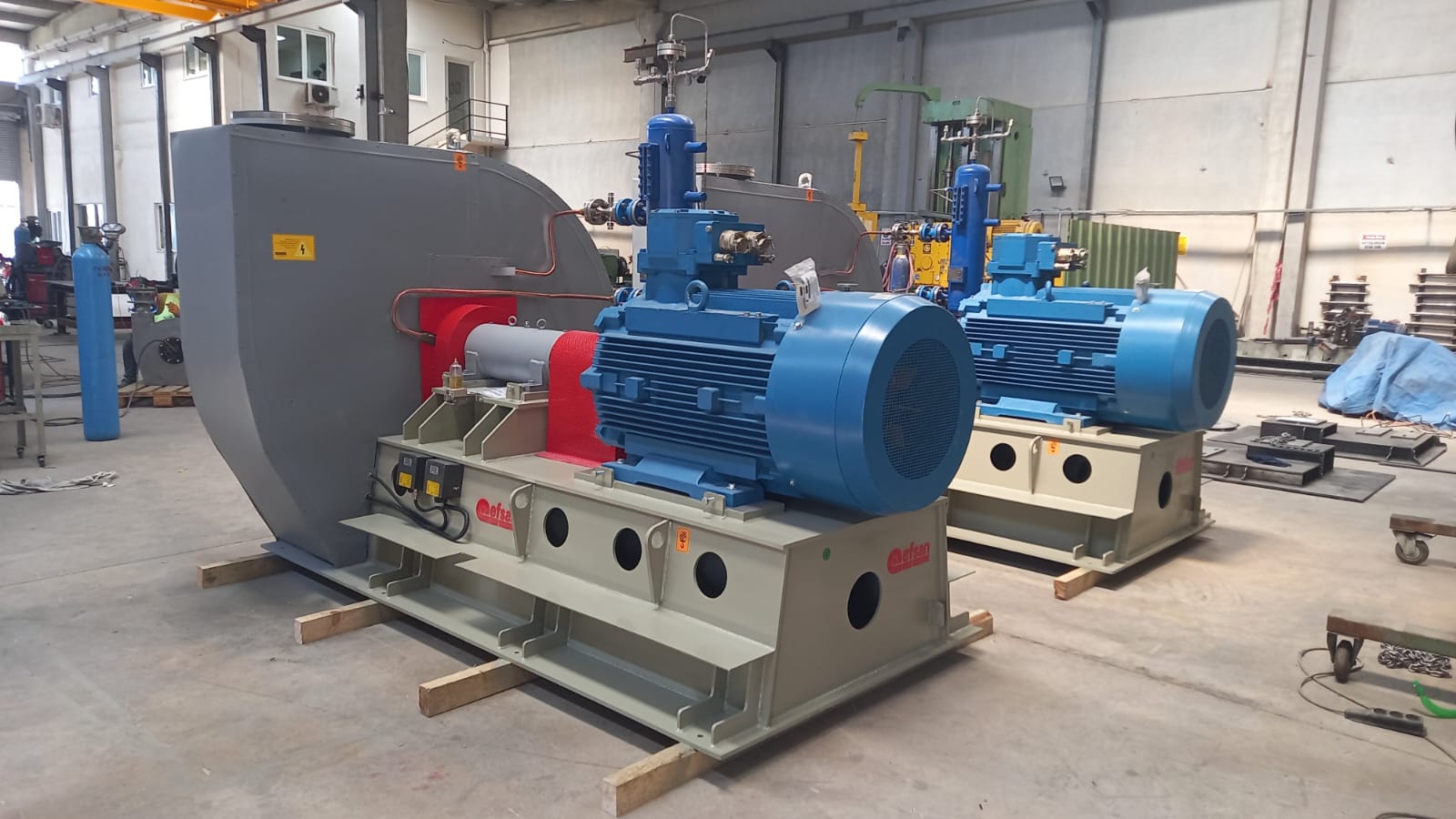
Efsan designs and manufactures custom return gas blowers focused on mechanical simplicity, utilizing direct-drive technology and advanced dynamic sealing to maximize reliability in critical LNG and BOG applications.
When it comes to securing the vapor recovery lines of critical infrastructure, off-the-shelf solutions rarely meet precise aerodynamic and safety demands. Aligned with stringent European manufacturing standards, Efsan approaches every Return Gas Blower project not just as a supplier, but as a dedicated engineering partner.
In our years of field application, we have consistently observed that custom-engineered, streamlined blowers—those intentionally stripping away unnecessary gearboxes and external lubrication systems—drastically outperform generic units in mean time between failures (MTBF). By focusing on direct-drive architectures and intelligent VFD integration, Efsan ensures that your facility benefits from a machine perfectly calibrated to your specific boil-off rates and pressure ratios. The result is uncompromised safety, zero leakage, and long-term operational stability.
Partnering with Efsan for Streamlined Gas Handling Solutions
The efficiency of your vapor recovery system depends entirely on the reliability of your return gas blower. From managing extreme cryogenic temperatures and supporting continuous LNG carrier unloading, to ensuring absolute ATEX-compliant leak tightness, the engineering requirements leave no room for compromise.
At Efsan, we leverage deep industrial engineering expertise to design and manufacture return gas blowers that champion the philosophy of simplicity and robust performance. We understand that eliminating unnecessary complexity results in equipment built for continuous, safe, and efficient operation.
Ready to optimize your boil-off gas and vapor recovery systems with an elegant engineering solution? Contact the engineering team at Efsan today to discuss your technical specifications and discover how our custom blower technologies can elevate your facility’s reliability.
tags :
More about the sector and our business