Table of Contents
- In Iron and Steel Factories Radial Fans Used
- Dedusting Fan: Emission Control and System Resistance
- Sintered ID Fan: Wear Resistance and Flow Control
- Flue Gas Fan: High Temperature and Thermal Management
- Problems Encountered in Fans in the Iron and Steel Industry
- Effects of Abrasive Dust on the Rotor
- Bearing Problems Caused by High Temperature
- Mechanical Design and Ease of Maintenance
- Frequently Asked Questions (FAQ)
Iron and steel production; It is one of the industrial processes where high temperature, corrosive gases, dust load and continuous production conditions coexist. Radial fans used in many stages from raw material preparation to arc furnaces, from furnace systems to rolling mills; It directly contributes to the efficient, stable and uninterrupted operation of the process.
Fans used in iron and steel mills are not only equipment tasked with transporting air. In arc furnaces (EAF) they undertake many tasks, such as sucking dust, drawing process gases in sinter plants, supplying combustion air in furnaces and supporting cooling processes in rolling mills. Therefore, it has a direct impact on fan performance, production capacity, energy consumption and process stability.
When choosing fans in the iron and steel industry, it is not enough to focus only on flow rate and static pressure values. The temperature, chemical structure, particulate (dust) load, operating regime and maintenance requirements of the transported fluid should be evaluated together. An incorrectly selected fan; It may have consequences that may increase operating costs, such as an increase in vibration levels, unbalanced air flow, unplanned maintenance stops and a decrease in process performance.
Radial fans that perform different tasks such as Dedusting Fan, Sinter ID Fan, Flue Gas Fan, Combustion Air Fan and Cooling Fan are used in iron and steel facilities. Each fan should be designed and evaluated with different engineering criteria according to the needs of the process it operates in.
In this article, the main radial fans used in iron and steel mills, their functions in the process and what should be taken into account in fan design will be discussed.
In Iron and Steel Factories Radial Fans Used
Many radial fans operating in different processes are used in iron and steel production facilities. Every fan; It is designed with different engineering criteria according to the temperature at which it operates, particle load, air flow rate and process needs. Below are the most commonly used radial fans in the iron and steel industry.
Dedusting Fan (Dust Holding Fan): Dedusting Fans provide controlled removal of emissions and dusty air generated in arc furnaces (EAFs) and other melting units. Emission control of the plant has a direct impact on the working environment and production efficiency.
Sinter ID Fan: Sinter ID Fans are suction fans that draw process gases from the sintering machine and transport them to the filter systems and chimney. It should be designed in accordance with high dust load and continuous operating conditions.
Flue Gas Fan (Flue Gas Fan): Flue Gas Fans enable the removal of high-temperature gases formed in furnaces and heat treatment plants from the system. It is among the important equipment of the process in terms of thermal expansion tolerance and bearing reliability.
Combustion Air Fan: Combustion Air Fans are fans that provide the combustion air required for burners in melting furnaces and thermal systems. Stable airflow and proper pressure help maintain combustion efficiency.
Cooling Fan: Cooling Fans are fans used to cool hot products or equipment produced in rolling mill lines and casting units. Important equipment for process efficiency includes.
Dedusting Fan: Emission Control and System Resistance
The controlled removal of dust and gases produced during the steel melting process in arc furnaces is one of the elements of the production process. Dedusting Fan, which undertakes this task, helps transmit the emission to the filter bags by ensuring the air balance within the system.
Failure to ensure adequate air suction in filter systems may cause the dust content in the working environment to increase and melting performance to decrease. This situation can directly affect production capacity. For this reason, when choosing a Dedusting Fan, not only the air flow rate; The working pressure (system resistance) created by the filters and the physical structure of the transported dust should be evaluated together.
Dedusting Fan is also an important equipment in terms of energy efficiency. A fan operated at the correct operating point can contribute to more balanced operation of the filter system while helping to reduce energy consumption.
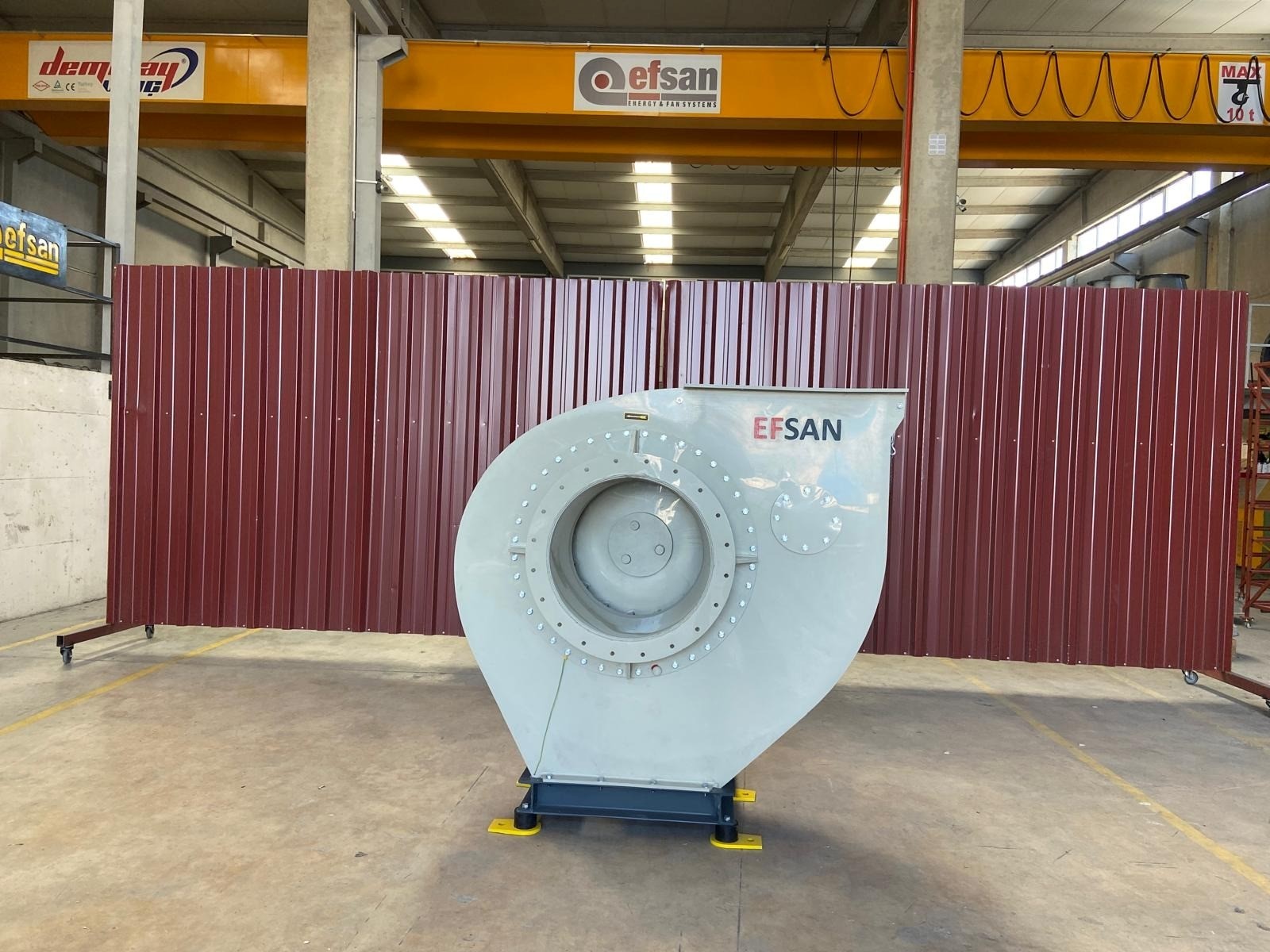
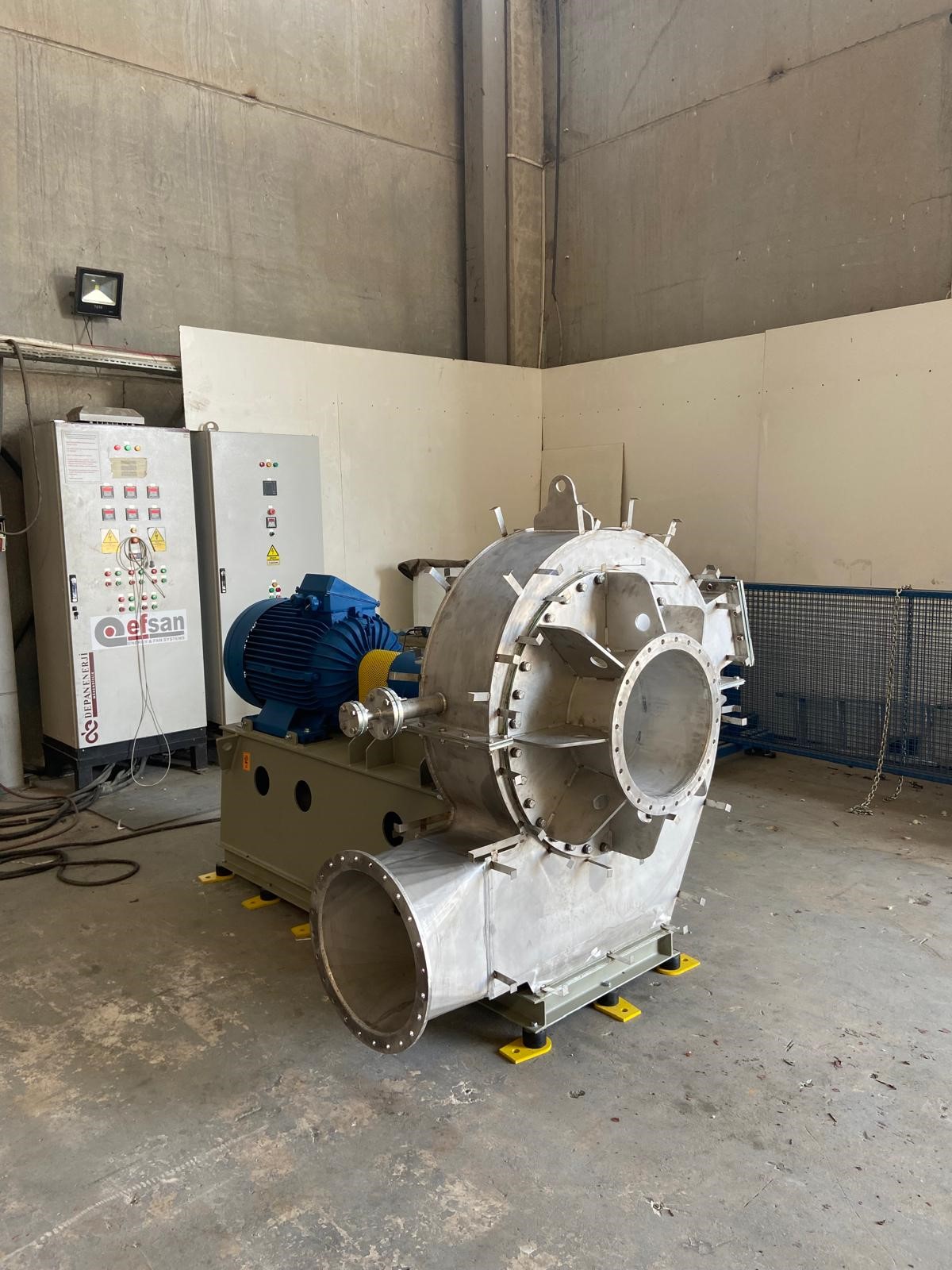
In these applications, not only capacity; The rotor’s behavior against dust accumulation, body internal flow structure, vibration control and maintenance access are also important engineering criteria. Especially in large EAF dedusting fans, the design of maintenance covers and split casing (two-piece snail) makes a significant contribution to rotor cleaning and periodic checks in a shorter time.
This article may interest you. Radial Fans Used in Paper Mills
Sintered ID Fan: Wear Resistance and Flow Control
Gases transported in the sinter process contain physically corrosive (abrasive) particles. Sintered ID Fan systems draw this particulate gas into the filter system, allowing the process to proceed as planned.
Sinter systems need stable suction conditions at every point of the production line. In this way, production efficiency can be supported and temperature differences that may occur throughout the process can be reduced.
In these applications, it is not enough for the fan to simply provide the required pressure. The use of wear-resistant materials (armor) on rotor surfaces against corrosive effects, low vibration operation and structural mechanical strength are among the basic engineering criteria to be considered for the Sinter ID fan system.
Flue Gas Fan: High Temperature and Thermal Management
Flue Gas Fans (Flue Gas Fans) are involved in the evacuation of process gases that can reach high temperatures from furnaces and their transmission to the flue system. Ensuring stable air flow in continuously operating furnace lines is of great importance for the reliability of the system.
In Flue Gas fan applications, the temperature of the transported gas and thermal changes in the system are the basic parameters to be taken into account in fan design. Unsuitable body material or bearing design; Thermal expansion may cause deformation, bearing failures and system downtime.
Therefore, under high temperature, the rotor, shaft and body can expand at different rates. Without proper thermal design, shaft misalignments, increase in bearing loads and mechanical deformations may occur. Heat barriers, cooling discs, appropriate bearing placement and water-cooled bearing housings should be evaluated in high temperature fans when necessary.
Problems Encountered in Fans in the Iron and Steel Industry
Radial fans working in iron and steel production facilities; It is exposed to conditions such as particle load, corrosive chemicals and high temperatures. It is not sufficient to provide only the desired flow rate and pressure values in fan selection. When mechanical design suitable for process conditions is not made; Problems such as performance losses, unplanned downtime and extended maintenance times may occur.
Effects of Abrasive Dust on the Rotor
Heavy particles transported in the sinter and steelworks processes cause wear on the rotor blades, mass loss and material profile change over time. This may cause the rotor balance to deteriorate, the vibration level to rise, and additional dynamic loads to occur on the bearing system.
Therefore, it is not enough to use only harder material in rotor design. Analyzing which regions the particles hit, at what speed and at what angle; It requires evaluating rotor geometry, material selection and wear protection applications together.
Bearing Problems Caused by High Temperature
Because Flue Gas Fan systems operate at high temperatures, improperly managed thermal loads can affect fan performance and bearing operating conditions. In particular, the heat transmitted through the shaft may cause deterioration of the lubrication system and increase the need for maintenance.
Therefore, high temperature fan design should take into account suitable bearing cooling systems and structural solutions that tolerate in-body thermal expansion.
Mechanical Design and Ease of Maintenance
Since most of the fans in the iron and steel industry are operated on a continuous operation basis, a mechanical design suitable for the reliable operation of the equipment for a long time must be created. The rotor, shaft, body and bearing system should be evaluated as a whole.
Suitable designs, especially those providing access to the rotor and body during maintenance, help to complete periodic checks of wearing parts in a shorter time. This approach contributes to reducing downtime and supporting business continuity.
If you want to improve the air quality of your facility, reduce unplanned downtime to zero and reduce your energy costs, here is the heavy-duty radial fan calculation that best suits your process Efsan contact their experts now.
Frequently Asked Questions (FAQ)
What are the most critical radial fans in iron and steel mills? In iron and steel production facilities, Dedusting Fan, Sinter ID Fan, Flue Gas Fan and Combustion Air Fan are among the important equipment for the continuity of the process. Since each fan serves a different process, design criteria and operating conditions also vary depending on the application.
What is the mission of Dedusting Fan? Dedusting Fan provides controlled removal of dusty air generated in arc furnaces and melting systems. It plays an important role in terms of air balance and emission control.
Why is Sinter ID Fan used? Sinter ID Fan is used to draw process gases from the sinter machine into the filter system. It helps create stable weather conditions on the production line and advance the process.
What is the difference between iron and steel process fans and standard radial fans? Fans operating in these processes operate under corrosive dust, corrosive gas and high temperature conditions. Therefore, mechanical design, material thicknesses, rotor wear resistance and bearing cooling systems are the primary criteria to be considered.
What are the most common problems encountered in fans in the iron and steel industry? The most common operating problems are wear caused by dust on the rotor, the resulting increase in vibration and high heat disrupting bearing conditions. These problems can be minimized by design appropriate to process conditions.
Why is the bed cooling system important in Flue Gas Fans? In flue gas fans operating at high temperatures, the heat transmitted through the shaft can negatively affect the operating conditions of the bearing. Reducing this thermal load with the appropriate bearing design contributes to maintaining the bearing working life.
What criteria should be taken into account when designing fans in iron and steel factories? In addition to flow rate and static pressure values in the design; Operating temperature, system resistance, physical properties of the transported particle, operating regime and mechanical strength should be evaluated together. Accurate engineering design provides significant advantages in terms of operating reliability.
tags :
More about the sector and our business