Table of Contents
- Fan Selection in Industrial Dedusting Systems: Why Should Flow and Pressure Be Evaluated Together?
- Fan Selection in Bag Filter Systems
- How Does Dust Load Affect the Fan Rotor?
- Material Accumulation and Maintenance in Rotor Design
- High Temperature Dedusting Systems
- Industrial Dedusting Fans by Industry
- Process Data Required for Dedusting Fan Selection
- Conclusion
- Frequently Asked Questions About Industrial Dedusting Systems
In industrial dedusting systems, fan selection is not made solely by determining the required air flow rate. The total pressure loss of the system, filter resistance, channel lines, suction points, physical properties of the dust and temperature of the gas should be evaluated together.
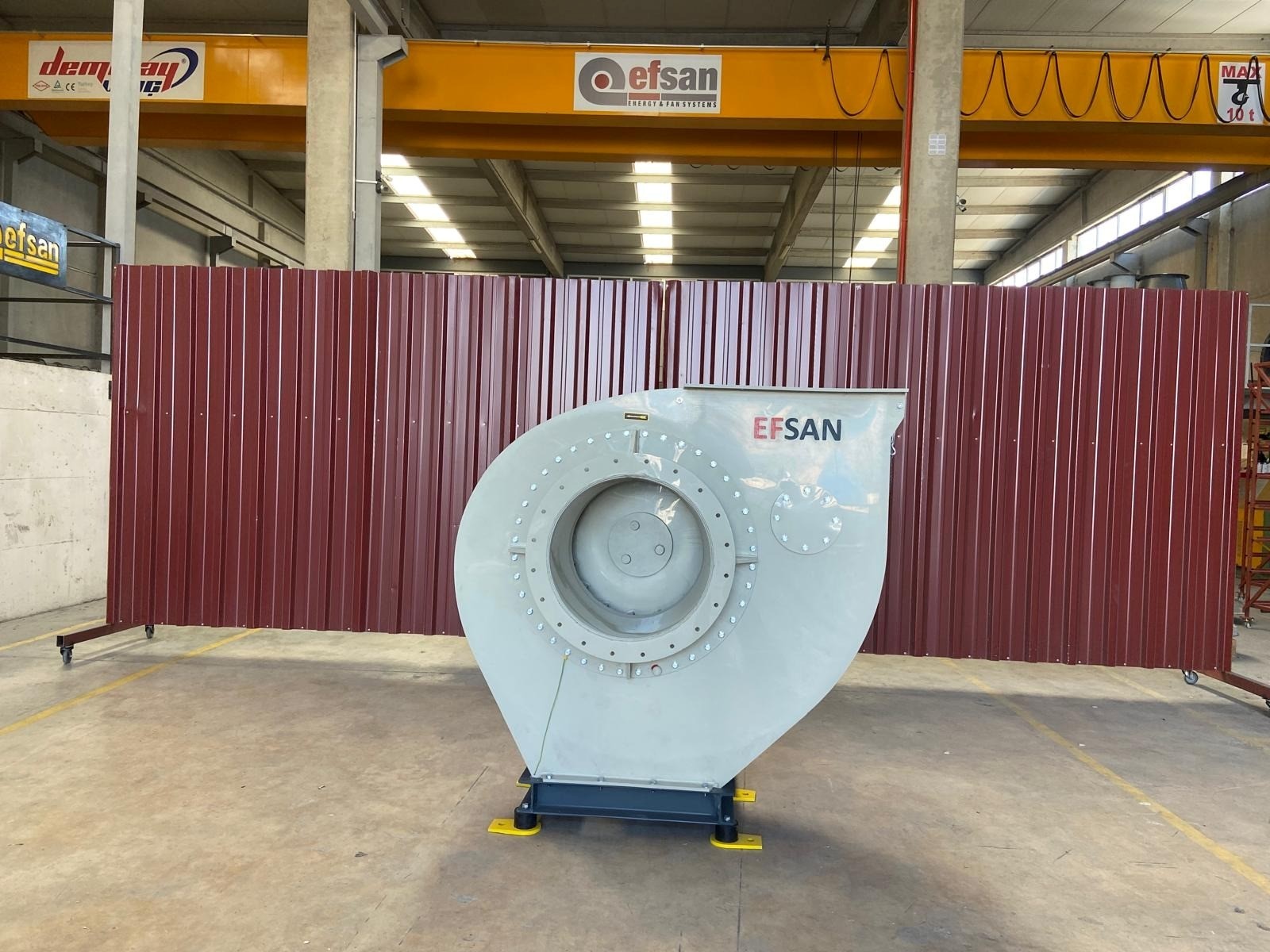
Especially Dust Collection Fan, the Dedusting Fan and the Industrial Dust Extraction Fan operating conditions in process fans can be quite different from a standard air fan. High dust concentration, corrosive particles, high temperature and material accumulation on the rotor directly affect the fan design.
Fan Selection in Industrial Dedusting Systems: Why Should Flow and Pressure Be Evaluated Together?
The operating point of a dedusting fan cannot be determined solely by flow rate. In addition to the flow rate provided by the fan, the total pressure requirement of the system must also be calculated correctly.
In this calculation;
- Losses of suction points and hoods,
- Pressure losses in duct lines,
- Elbow, damper and fasteners,
- Bag Filter pressure loss,
- If a cyclone or scrubber is used, their pressure losses,
- Resistors of other equipment within the system
evaluated together.
Hence High Pressure Dust Extraction Fan it is not right to look only at the catalog flow rate of the fan when choosing it. The actual operating point of the fan must be determined along with the total resistance of the system.
Fan Selection in Bag Filter Systems
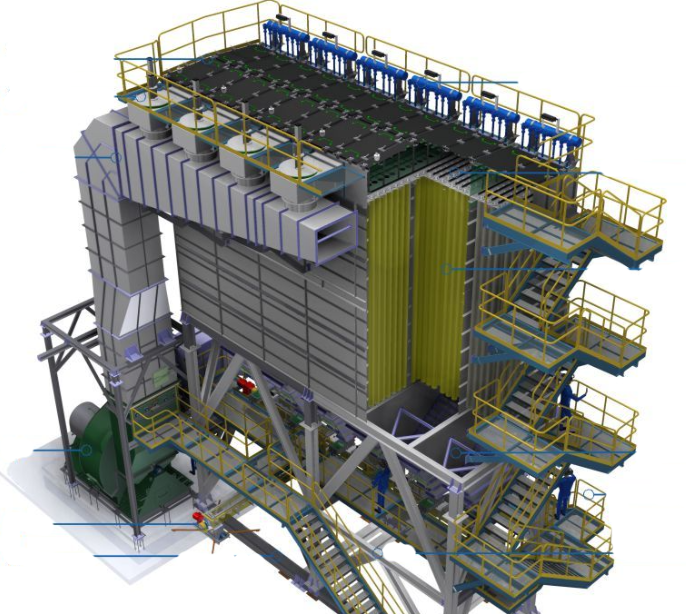
In dedusting systems using bag filters, the fan is generally positioned on the downstream side of the filter and creates the suction needed by the system. The pressure loss of the filter in clean and dirty condition should be taken into account in fan selection.
Therefore Bag Filter Fan in its selection, not only the nominal filter capacity should be taken into account, but also the pressure loss that the filter will create during operation and other resistances in the system.
How Does Dust Load Affect the Fan Rotor?
One of the most important problems faced by the fan rotor in dust-carrying gases abrasion and it is the accumulation of material on rotor surfaces.
Especially at high particle concentrations;
- Wear on the wings,
- Material accumulation on rotor surfaces,
- Rotor unbalance,
- Local erosion,
- Rising vibration level of the fan
visible.
Therefore Process Dedusting Fan in its design, the character of the material, particle size, concentration and operating temperature should be taken into account as well as the rotor geometry.
In areas suitable for abrasive applications wear-resistant plate / wear plates available. However, armoring should not be considered only as adding materials; The balance of the rotor, weight distribution and maintenance need should be evaluated together.
Material Accumulation and Maintenance in Rotor Design
If the powder is sticky or at high temperature, deposition on the rotor may occur. This accumulation over time can change the balance of the rotor and cause fan vibrations to rise.
Therefore, cleanability, maintenance access and when necessary in rotor design split casing constructions that provide ease of maintenance become important.
High Temperature Dedusting Systems
In processes where the gas temperature is high, fan selection should not be evaluated solely in terms of material strength. It may occur due to the temperature of the rotor, casing, shaft and bearing system thermal expansion their effects should also be taken into account.
High temperature, mainly used in cement, iron and steel and mineral processes Dedusting Fan in their application, the design temperature of the fan should be determined according to actual process conditions.
Industrial Dedusting Fans by Industry
Dedusting Fans in Cement Factories
High amounts of dust are formed in clinker, raw materials, grinding and transportation processes in cement plants. Used in these applications Cement Plant Dedusting Fan rotor wear and material accumulation are important design criteria due to high particle load in their systems.
Especially requiring high flow rate and pressure High Pressure Dust Extraction Fan rotor material, wear plates and maintenance access should be evaluated together in their applications.
Dedusting Fans in Iron and Steel Mills
In iron and steel plants, especially EAF, sinter and various process gas suction systems, there is high temperature and intense particle load.
EAF Dedusting Fan and the Sinter Dedusting Fan high temperature, corrosive dust, rotor erosion and thermal expansion are the basic parameters of fan design in its applications.
In Mineral, Calcite, Plaster and Mining Facilities
The high abrasive character of particles transported in calcite, gypsum, minerals and similar processes can cause serious wear on the fan rotor.
In these applications Industrial Dust Extraction Fan when choosing, particle character, concentration, gas flow rate, pressure and wear-resistant rotor design should be evaluated together.
In Chemical and Process Facilities
In chemical processes, corrosive or hot gases can be carried in the system as well as dust. Therefore Process Dedusting Fan its design must take into account not only the particulate charge, but also the chemical properties of the gas, its temperature and the possibility of condensation.
Process Data Required for Dedusting Fan Selection
For fan selection, the following data should be as clear as possible:
- Air/gas flow rate
- Fan inlet temperature
- Required fan pressure
- Gas density
- Dust concentration
- Particle size and character
- Whether the powder is abrasive or sticky
- Filter type and pressure loss
- Canal system and total line loss
- Operating and design temperature
- Engine power and operating speed
- Required material and corrosion conditions
Through this data Dust Collection Fan, the Dedusting Fan or High Pressure Dust Extraction Fan when making the selection, the actual system operating point, not just the rated capacity of the fan, should be evaluated.
This article may interest you. Process Fans and Blowers Used in Petrochemical Plants
Conclusion
In industrial dedusting systems, fans, filters and duct systems should not be considered as independent equipment. The flow rate and pressure capacity of the fan should be considered together with filter resistance, channel losses, dust load, temperature and wear conditions.
Especially true in processes with high dust concentrations Industrial Dust Extraction Fan design; It is of direct importance in reducing rotor wear, balance problems and the need for unplanned maintenance.
Frequently Asked Questions About Industrial Dedusting Systems
How to choose a fan for the dedusting system?
Fan selection; The required flow rate, total system pressure loss, filter resistance, channel losses, gas temperature and dust load are evaluated together. Choosing a fan based solely on flow rate does not guarantee that the correct operating point is achieved.
What is the difference between dedusting fan and standard process fan?
In dedusting fans, the fan can carry gases with a high concentration of particulates. Therefore, factors such as rotor wear, material accumulation, balance and suitable rotor material are more important than standard clean air fans.
What is a bag filter fan?
Bag Filter Fanis the fan that provides the necessary air flow and suction in bag filter dust collection systems. When choosing a fan, the pressure loss caused by the bag filter during operation must be taken into account.
Why does wear occur on the dusty gas fan rotor?
Particles in the gas can contact the rotor blades at high speed and cause erosion and wear over time. The hardness, size, concentration and speed of the particle within the fan directly affect the wear level.
Why is it important for dust to accumulate in the fan rotor?
Material accumulation on the rotor can change the weight distribution and cause balancing problems. Rotor geometry and cleanability must therefore be taken into account, particularly in the case of cohesive or moisture-containing dusts.
Are wear plates used in Industrial Dedusting fans?
Yes. In order to increase the life of the rotor and other necessary areas in applications containing high abrasive particles wear-resistant plate or suitable wear-resistant materials can be used. The correct material and thickness for application should be evaluated separately.
What should be considered in high temperature dedusting fans?
Fan design temperature, thermal expansion, rotor and casing materials, bearing system and shaft design should be evaluated together. It is important to determine the actual operating temperature and design temperature correctly, especially in cement and iron and steel plants.
Why is split casing preferred in an Industrial Dedusting fan?
Split casing its design can provide easier access to rotors and other components during maintenance, especially in large and heavy fans. It can provide advantages in terms of reducing the maintenance time of the fan and serviceability of the equipment.
Is a replacement fan necessary in dedusting systems?
If there is a possibility of fan failure stopping production in critical processes standby fan or the appropriate backup concept can be evaluated. The need for replacement fans should be determined by the criticality of the process, maintenance time and acceptable downtime.
To calculate the capacity for your Industrial Dedusting process and to best suit your system Efsan immediately with our engineering team to determine the industrial suction fan contact pass.
tags :
More about the sector and our business