Table of Contents
- Radial Fans Used in Paper Mills
- Hood Exhaust Fan: Drying Performance and Energy Efficiency
- Pocket Ventilation Fan: Controlled Air Flow for Homogeneous Drying
- Shredding Fans (Trim Fan)
- Pocket Ventilation Fan: Drying Efficiency and Humidity Control
- Vacuum Fans (Paper Machine Vacuum Fan)
- MVR Technology in Paper Mills: Energy Efficient Evaporation System That Reduces Steam Consumption
- Problems Encountered in Fans in the Paper Industry
- Deposition of Fiber and Paper Dust on the Rotor
- Trim Fans (Carrying Fans): Material Handling Performance and Design Criteria
- Body Designs That Extend Maintenance Time
- Corrosion and Material Problems Caused by Moisture
- Mechanical Design and Ease of Maintenance
- Frequently Asked Questions (FAQ)
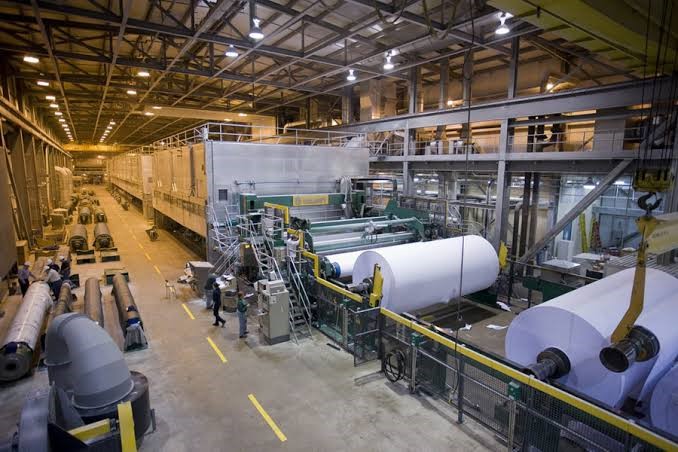
Paper production; It is one of the sensitive industrial processes that combine high temperature, humidity, fiber (fiber) transport and continuous production conditions. Radial fans used in many stages, from dough preparation to drying section, from steam systems to air circulation; processit directly contributes to its efficient, stable and uninterrupted operation.
Fans used in paper mills are not just equipment tasked with transporting air. They undertake many critical tasks such as ensuring hot air circulation in drying systems, removing moist air in the hood (hood), supporting vacuum systems, dust and fiber transportation, and managing process air in boilers and auxiliary facilities. Therefore, it has a direct impact on fan performance, production capacity, energy consumption and product quality.
When choosing a fan in the paper industry, it is not enough to focus only on flow rate and static pressure values. Temperature, humidity, fiber and dust load, operating regime, energy efficiency and maintenance requirements of the transported fluid should be evaluated together. An incorrectly selected fan; It may have consequences that may increase operating costs, such as high energy consumption, unbalanced air flow, unplanned maintenance stops and a decrease in process performance.
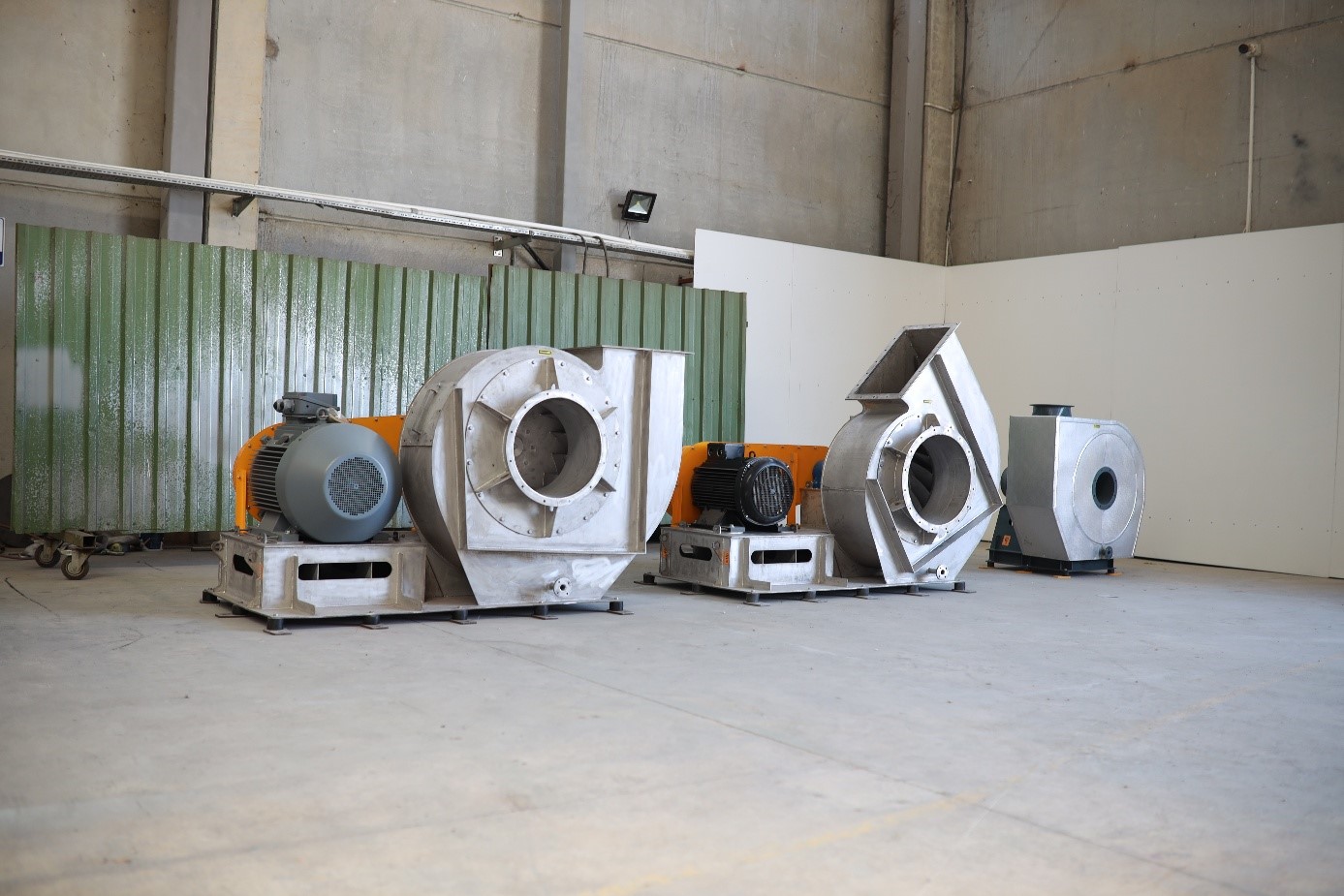
In paper production facilities Hood Exhaust Fan, the Pocket Ventilation Fan, the Dryer Fan, the Vacuum Fan, the ID Fan and the Combustion Air Fan radial fans are used, which undertake different tasks such as. Each fan should be designed and evaluated with different engineering criteria according to the needs of the process it operates in.
In this article, the main ones used in paper mills radial fans, their duties in the process and what needs to be taken into account in fan selection will be discussed.
Radial Fans Used in Paper Mills
Many radial fans operating in different processes are used in paper production facilities. Every fan; It is designed with different engineering criteria according to the temperature, humidity, air flow rate and process needs it operates at. Below are the most commonly used radial fans in the paper industry.
Hood Exhaust Fan
Hood Exhaust Fans provide controlled removal of hot and humid air formed in the hood (hood) in the drying section. It has a direct effect on drying efficiency, energy consumption and air balance within the machine.
Pocket Ventilation Fan
Pocket Ventilation Fans help increase drying efficiency by removing pockets of moist air that form between drying cylinders. It contributes to more homogeneous drying of the paper by providing balanced air flow.
Dryer Circulation Fan
Dryer Circulation Fans contribute to increasing energy efficiency by circulating hot air in the drying system. Balanced air distribution is important for drying performance.
Vacuum Fan
Vacuum fans serve vacuum systems used in different parts of the paper machine to remove water and shape the paper sheet. Equipment critical to process efficiency include.
Combustion Air Fan
Combustion Air Fans are fans that provide combustion air in steam boilers and thermal systems. Stable airflow and proper pressure help maintain combustion efficiency.
ID Fan (Induced Draft Fan)
ID Fans are suction fans that allow the gases coming out of the boiler or process systems to be transported to the filter system and chimney. It must be designed in accordance with high temperature and continuous operating conditions.
Trim Fan/Shredding fan
Trim Fans are fans that enable pneumatic transportation of paper scraps formed in cutting and trim lines. Reliable air flow contributes to the uninterrupted operation of the production line.
Mist Exhaust Fan
Mist Exhaust Fans enable the removal of water vapor and fine moisture particles formed during production from the working environment. It is especially important for the protection of the working environment and the longevity of equipment.
Hood Exhaust Fan: Drying Performance and Energy Efficiency
Controlled removal of hot and humid air in the drying section (Dryer Section) of the paper machine is one of the basic elements of drying efficiency. The one who undertakes this task Hood Exhaust Fanhelps remove moisture from the environment by ensuring the air balance in the drying hood (hood).
Failure to provide adequate air exchange within the hood may result in increased humidity and reduced drying performance. This situation can directly affect production capacity and energy consumption. For this reason, when choosing a Hood Exhaust Fan, it is not just the air flow rate; The working pressure, exhaust temperature, humidity and system resistance of the hood should be evaluated together.
Hood Exhaust Fan is an important equipment in terms of energy efficiency. A fan that is correctly selected and operated at the correct operating point can contribute to a more balanced operation of the drying system while helping to reduce unnecessary energy consumption.
This article may interest you. Radial Fans Used in Cement Factories
Pocket Ventilation Fan: Controlled Air Flow for Homogeneous Drying
Air pockets (pockets) formed between drying cylinders can limit drying performance due to high humidity. Pocket Ventilation Fan their systems remove moist air from these areas, allowing more effective use of drying air.
Pocket Ventilation systems contribute to similar drying conditions at every point of the paper. In this way, drying efficiency can be increased, moisture differences that may occur throughout the paper can be reduced, and product quality can be supported to be more stable.
In these applications, it is not sufficient for the fan to provide only the required flow rate. Balanced air distribution, low vibration operation, energy efficiency and fan characteristics suitable for system resistance are also among the basic engineering criteria to be considered for a successful Pocket Ventilation system.
Shredding Fans (Trim Fan)
Shredding fans (Trim Fan) are fans used to pneumatically transport edge cuts (trim) formed in the paper production line and to reliably transmit them to the shredding system. Providing stable air flow in continuously operating lines is of great importance in terms of transporting clippings within the line without accumulating them.
Trim fan applications should not be considered as standard fans that only provide the required flow rate. The structure of the transported material, the weight of the paper, the moisture content, the fiber characteristic and the tendency to stick are the main parameters to be taken into account in fan design. Incorrect rotor geometry or inappropriate flow design; It may cause material accumulation, blockages and decreased transport performance.
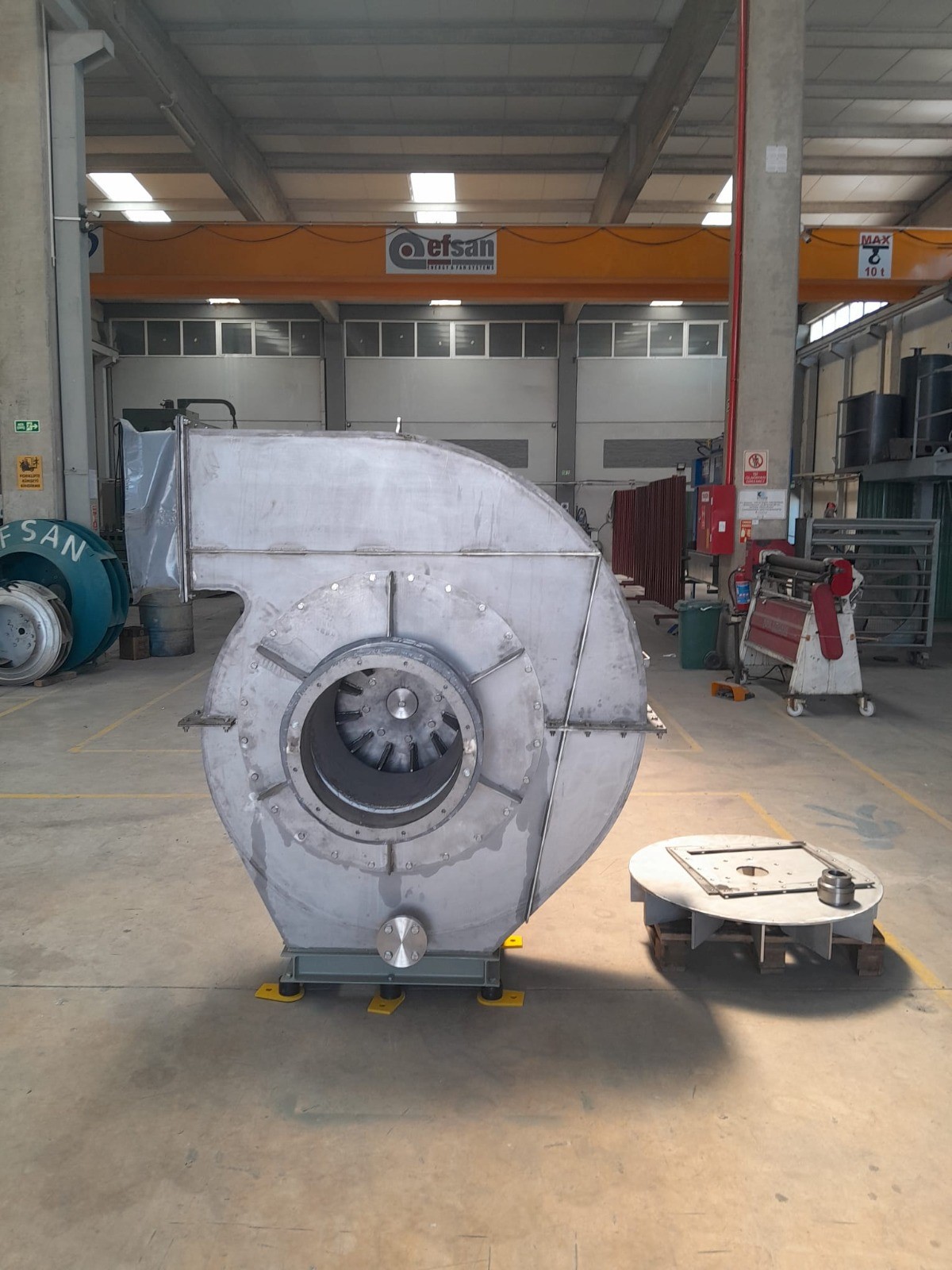
Rotor design is therefore critical in shredding fans. The rotor geometry should be evaluated in such a way as to minimize the accumulation of the transported pieces of paper within the fan, favouring uninterrupted flow and reducing possible adhesion problems. In addition, in cases requiring maintenance or cleaning, the fan’s suitability for rapid intervention and its design in an easily cleanable and accessible structure are among the important engineering criteria in terms of operating continuity.
Pocket Ventilation Fan: Drying Efficiency and Humidity Control
Pocket Ventilation Fan systems provide controlled removal of hot and humid air in air pockets (pockets) formed between drying cylinders. In this way, the effectiveness of the drying air is increased and it contributes to a more homogeneous drying of the paper throughout the machine.
Failure to adequately remove moist air from the drying section can result in reduced drying performance, impaired product moisture distribution, and increased energy consumption. For this reason, when choosing a Pocket Ventilation Fan, it is not just the air flow rate; Air distribution, system resistance, energy efficiency and process conditions should be evaluated together.
A correctly designed Pocket Ventilation system contributes to increasing drying efficiency, optimizing energy use and ensuring more stable production conditions.
Vacuum Fans (Paper Machine Vacuum Fan)
Vacuum fans (Paper Machine Vacuum Fan) are one of the basic equipment of vacuum systems that help remove water from pulp in the forming (forming) and pressing (press) sections of the paper machine. Effective vacuum performance plays an important role in shaping the paper, controlled removal of water and maintaining production speed.
When selecting fans in vacuum systems, the vacuum level, air flow rate, system losses and operating conditions needed should be evaluated together. A correctly selected vacuum fan; It can contribute to reducing energy consumption, increasing production stability and making equipment work more efficiently.
The reliability of vacuum fans is of great importance in continuously operating paper machines. Therefore, mechanical strength, low vibration level, ease of maintenance and long-term operating performance are among the basic engineering criteria that should be taken into account in fan design.
MVR Technology in Paper Mills: Energy Efficient Evaporation System That Reduces Steam Consumption
A significant part of the energy consumption in paper production facilities comes from steam systems. Especially Black Liquor (Black Liquor), the White Water (White Water), starch solutions and evaporation systems used to concentrate various process fluids are among the processes that require high heat energy. Therefore, using steam as efficiently as possible is an important engineering issue in terms of reducing operating costs.
Mechanical Vapor Recompression (MVR) its technology is a high-efficiency heat recovery method that works by re-evaluating the energy content of secondary steam formed during evaporation. Secondary steam leaving the evaporator, MVR Blower it is compressed at a low pressure rate by. With the pressure increase, the temperature of the steam rises and the resulting steam is recovered to the process by using it again on the heating side of the same evaporator.
Thanks to this cycle, the need to continuously introduce high amounts of fresh steam into the system is significantly reduced, while the evaporation process can be maintained within the same system. Thus, both steam consumption and operating costs can be reduced, while energy use efficiency can be increased.
The energy savings achieved in MVR systems do not depend solely on evaporator design. Located at the heart of the system MVR Blower, must be able to compress steam at the required pressure ratio with high isentropic efficiency and operate stably in variable process conditions. Therefore, the choice of blower; It is one of the most important engineering parameters that directly affects energy consumption, process capacity and system reliability.
Problems Encountered in Fans in the Paper Industry
Radial fans working in paper production facilities; It is exposed to harsher working conditions than standard industrial applications due to fiber (fiber), paper dust, high humidity and hot weather. It is not sufficient to provide only the desired flow rate and pressure values in fan selection. Without mechanical design appropriate to operating conditions, performance losses, unplanned downtime and extended maintenance times become inevitable.
Deposition of Fiber and Paper Dust on the Rotor
Fibers and fine paper powders carried in paper processes accumulate on the rotor blades over time, changing the mass distribution of the rotor. This may cause the rotor balance to deteriorate, the vibration level to rise, and additional dynamic loads to occur on the bearing and shaft.
For this reason, geometry that will minimize the adhesion of fiber and dust on the blades should be preferred in rotor design; Flow characteristics that help self-cleaning should be targeted as much as possible.
Trim Fans (Carrying Fans): Material Handling Performance and Design Criteria
Trim Fans (Carrying Fans) are special fans that enable pneumatic transportation of edge cuts (trim) formed in the paper machine. These fans not only carry air; It also ensures uninterrupted transportation of paper pieces with different weights, humidity and fiber structure along the line.
Therefore, rotor geometry, fan internal volume and flow path are critical in Trim Fan design. Rotor structures that are not properly designed may cause pieces of paper to circulate on the rotor, accumulate in the fan body, or cause blockages in the conveying line. The rotor design developed taking into account the physical properties of the material to be transported makes a significant contribution to the reliable and uninterrupted operation of the system.
In addition, rapid access to the fan is an important engineering criterion in cases requiring maintenance. Especially maintenance covers and two-piece (split casing) snail design, allowing the inside of the rotor and body to be cleaned in a short time and maintenance operations to be carried out without completely disassembling the fan.
Body Designs That Extend Maintenance Time
Production continuity is of great importance in the paper industry. The ability to intervene quickly in the equipment in case of fiber accumulation in the fan or planned maintenance needs provides a significant advantage for operation.
That’s why especially in large fans two-piece (split casing) snail design, significantly simplifies maintenance and cleaning operations. By being able to split the snail body in two, the rotor and internal surfaces can be accessed in a short time; cleaning, checking and maintenance operations can be carried out without disassembling the entire fan. This design contributes to shortening maintenance times and reducing production downtime.
Corrosion and Material Problems Caused by Moisture
Since Hood Exhaust Fan systems operate at high temperatures and with air containing high humidity, improperly managed condensation can negatively impact fan performance and equipment life. Condensate water that may occur especially within the fan body; It may cause corrosion, dirt accumulation and increased maintenance needs.
That’s why Hood Exhaust is in Fan design condensate drainage system, appropriate drainage points and structural solutions that enable controlled evacuation of water within the body should be taken into account. When necessary, body slope, drainage connections and maintenance access should be evaluated together and the fan should be aimed to operate reliably for a long time.
Mechanical Design and Ease of Maintenance
Since most of the fans in the paper industry are operated on a 24/7 operating basis, it is not enough to just provide the desired flow rate and pressure values. The rotor, shaft, body, bearing system and maintenance concept should be evaluated as a whole; Mechanical design suitable for the reliable operation of the equipment for a long time should be created.
Designs that provide quick access to the rotor and body, especially during maintenance, help complete cleaning and periodic checks in a shorter time. This approach contributes to reducing the risk of unplanned downtime and supporting business continuity.
In your projects, not only “choosing ready-made products from the catalogue”; By analyzing the layout of your facility, air flow rate, pressure losses and the chemical structure of the process customized (custom-made) solutions if you are looking for an engineering partner that produces, Efsan Machine it is the correct address.
Frequently Asked Questions (FAQ)
What are the most critical radial fans in paper mills?
In paper production facilities Hood Exhaust Fan, the Pocket Ventilation Fan, the Vacuum Fan, the Trim Fan (Carrying Fan) and the Combustion Air Fan equipment critical to the continuity of the process include. Because each fan serves a different process, selection criteria and operating conditions also vary depending on the application.
What is the mission of Hood Exhaust Fan?
Hood Exhaust Fan provides controlled removal of hot and humid air formed in the drying hood (hood). Proper air balance plays an important role in drying performance, energy efficiency and product quality.
Why use Pocket Ventilation Fan?
Pocket Ventilation Fan helps use drying air more effectively by removing moist air pockets formed between drying cylinders. In this way, more homogeneous drying conditions can be established and drying performance can be improved.
Is Trim Fan (Carrying Fan) different from standard radial fans?
Yes. Trim Fans pneumatically transport not only air but also paper scraps. Therefore, rotor geometry, fan internal structure and ease of maintenance are much more critical design criteria than standard radial fans.
What are the most common problems encountered in fans in the paper industry?
The accumulation of fiber and paper dust on the rotor, moisture-induced corrosion, blockages in transport fans, condensation problems and inadequate maintenance access are among the most common operating problems. A significant part of these problems can be reduced by fan design suitable for process conditions.
Why is the drainage system important in Hood Exhaust Fans?
Condensation may occur within the body in hood exhaust fans operating with high humidity air. Controlled evacuation of condensate water with appropriate drainage system; It contributes to reducing the risk of corrosion and more reliable operation of the equipment.
What is the advantage of designing the fan body in two parts (Split Casing)?
The two-piece snail design provides easy access to the rotor and fan body during maintenance and cleaning. In this way, periodic maintenance, cleaning and checks can be carried out in a shorter time without the need to completely disassemble the fan and pipe.
Should fans be backed up in paper mills?
In paper plants where production continuity is critical, especially Hood Exhaust Fan, the Vacuum Fan and for other process fans that directly affect production, it is recommended to consider a replacement fan (standby fan) or an appropriate backup strategy. Scheduled maintenance or the ability to engage a backup fan in case of unexpected malfunctions contributes to minimizing production downtime and carrying out maintenance work in a controlled manner.
What criteria should be taken into account when choosing fans in paper mills?
Only flow rate and static pressure values are not sufficient in fan selection. Operating temperature, humidity, amount of fiber transported, system resistance, ease of maintenance, material selection and operating conditions should be evaluated together. Choosing the right fan provides significant advantages in terms of both energy consumption and operating reliability.
Why is MVR technology preferred in paper mills?
MVR (Mechanical Vapor Recompression) technology enables the secondary steam formed in evaporation processes to be recompressed and used as a heat source. In this way, the need for fresh steam can be significantly reduced, energy efficiency can be increased and operating costs can be reduced.
tags :
More about the sector and our business