Table of Contents
Industrial production processes inherently involve risks. However, while some risks are manageable, others can lead to irreparable disasters. Petrochemical plants, paint shops, pharmaceutical production lines, or silos containing high concentrations of organic dust such as flour or sugar are ‘potentially explosive atmospheres’ where a small spark can cause a major explosion. The most critical component of this equation is ventilation systems, namely Exproof Fans.
As an engineer or operations manager, you should not view the selection of an exproof fan as merely a ‘purchasing process.’ It is both a legal requirement (ATEX Directives) and an insurance policy for the continued existence of your business.
In this comprehensive guide, we cover the physical fundamentals of explosion-proof technology, the intricacies of zone classification, motor protection types, and the roadmap to making the right choice based on the experience we have gained in the field at Efsan Makina, in full detail.
What is Exproof Technology? Physical Fundamentals and Working Principle
Exproof (Explosion Proof) literally means ‘protected against explosion’. However, in technical literature, this concept does not mean that the equipment will not explode; it means that the equipment will not cause an explosion.
In industrial fire and explosion literature, there is the concept of the ‘Fire Triangle’:
- Combustible Material: Gas, vapour or dust.
- Oxygen: Oxygen present in the air.
- Ignition Source: Spark, arc, high surface temperature.
The electric motor of a normal industrial fan can generate micro-level arcs while running or when switching on/off (contactor operation). Alternatively, mechanical friction caused by bearing failure can heat the fan housing. In a standard environment, this is insignificant. However, if solvent vapour is present in the air, this fan acts as a ‘lighter’.
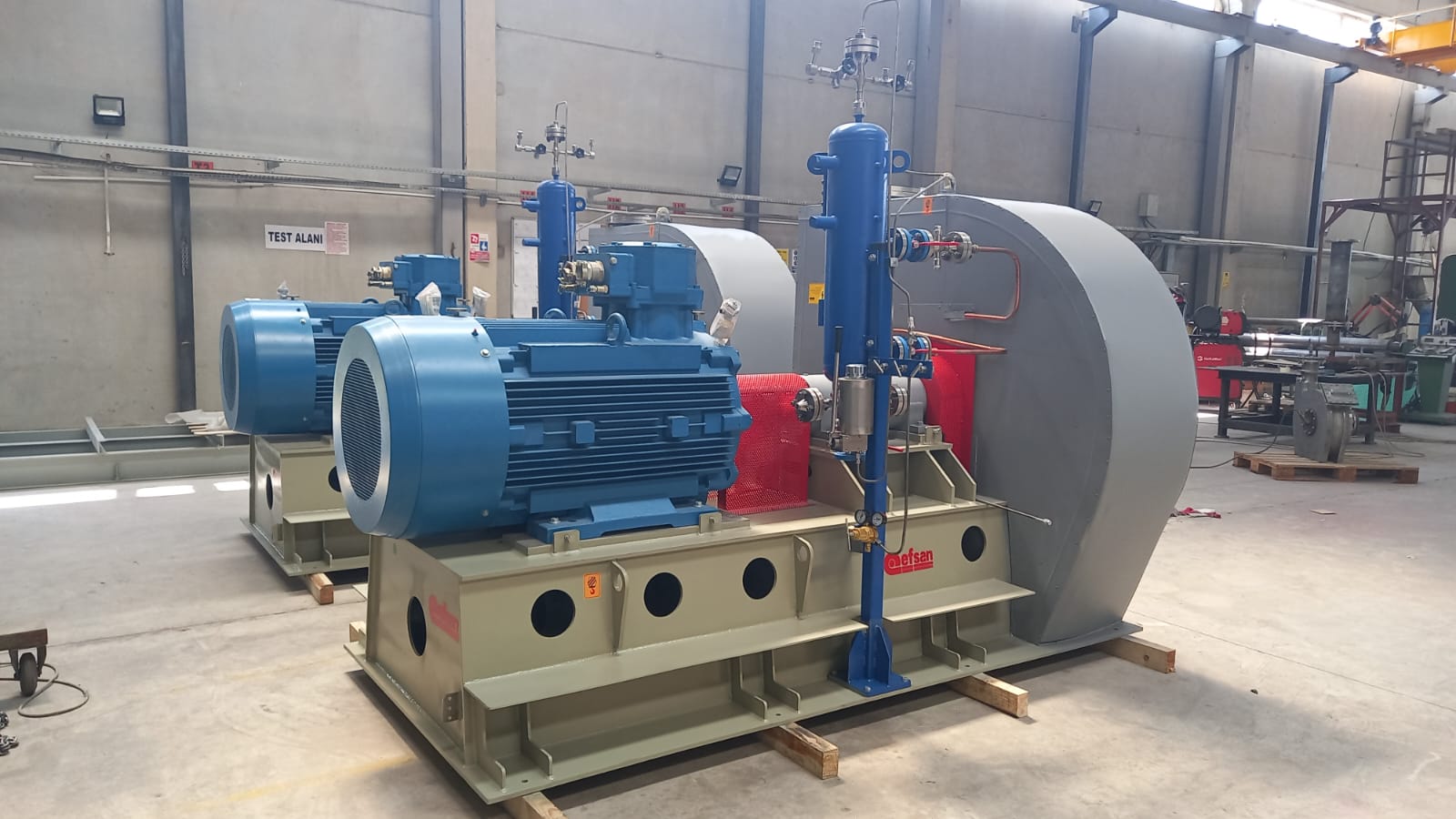
Exproof Fans are industrial equipment designed to prevent sparks originating from the internal structure of the electric motor or mechanical friction from igniting the explosive atmosphere in the external environment, in environments containing explosive and flammable gases or dust.
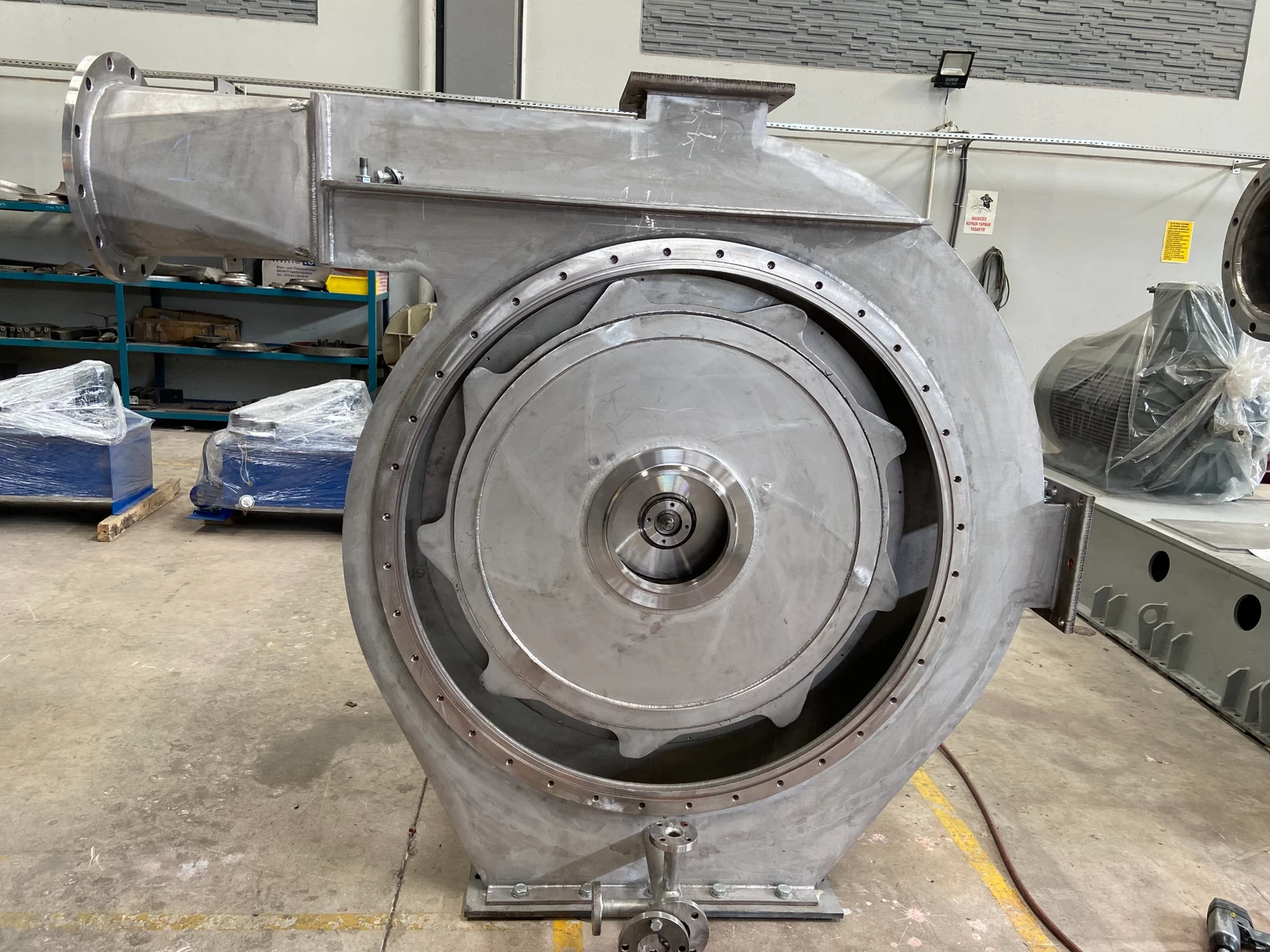
All components used in these fans (body, blades, motor, terminal box) are manufactured according to principles of friction-induced spark prevention, leak-proofing, low surface temperature, and static electricity discharge.
This article may be of interest to you. Explosion-Proof Fan Systems A Vital Solution for Areas with Explosion Risks
Reading the Risk Map: Zone Classification and Critical Differences
The first question to ask before ordering an explosion-proof fan is not ‘How much flow rate is needed?’ but ‘In which Zone will it operate?’ According to the ATEX 137 (Workplace Safety) directive, facilities are divided into zones based on their hazard levels. Incorrect Zone identification results in either unnecessary costs (over-engineering) or fatal safety breaches.
Gas and Vapour Environments (Group G)
- Zone 0: Areas where explosive gas is constantly or for very long periods present in the environment (e.g. inside fuel tanks). Fans used here must be ‘Category 1’.
- Zone 1: Areas where there is a high probability of an explosive atmosphere forming under normal operating conditions (e.g., filling nozzles, valve surroundings). Requires ‘Category 2’ equipment.
- Zone 2: Areas where an explosive atmosphere does not normally form, or if it does, it is very short-lived (e.g., storage areas, pipeline flanges). Category 3 equipment is sufficient.
Dust Environments (Group D)
The most neglected risk in industry is ‘dust explosions’. Materials such as flour, sugar, aluminium dust, and coal dust are highly flammable when suspended in the air.
| Zone (Dust) | Description | Efsan Makina Recommendation |
| Zone 20 | Areas where combustible dust clouds are present continuously or for long periods (e.g., inside silos, cyclones). | Very High Protection (IP6X Mandatory) |
| Zone 21 | Areas where combustible dust clouds are likely to occur occasionally during normal operation (e.g., filling/discharging points). | High Protection |
| Zone 22 | Areas where dust accumulation exists, but the risk of the dust becoming airborne is low during normal operation. | Standard Exproof Protection |
Efsan Machinery and Engineering Approach: Why Standard Products Are Not Enough?
The ‘off-the-shelf product’ approach does not always work in industrial processes. Especially in explosion-proof systems, each facility has a different chemical composition and physical layout. This is where Efsan Makina steps in, not just as a manufacturer, but as a solution partner.
A common problem we encounter in the industry is that companies only choose explosion-proof motors and manufacture the fan casing from standard sheet metal. This is a major misconception. Every explosion-proof fan that comes off the Efsan Makina production line passes through the following engineering filter:
- Non-Sparking Guarantee: Copper (brass) or special alloy aluminium rings are placed between the fan blade and the body to prevent sparks, even if there is friction due to a possible shaft misalignment (imbalance, etc.).
- Static Discharge: Static electricity build-up in plastic or composite fans can cause explosions. We use special materials with increased conductivity (antistatic) or metal bodies with continuous grounding.
- Specially Designed Intake Hoppers: We apply aerodynamic designs that reduce turbulence and consequently heat generation without disrupting the gas flow dynamics.
For us, an explosion-proof fan is not just a pile of metal with a label stuck on it; it is an engineering marvel that safeguards the security of your facility.
Protection Type ‘h’ for Non-Electric Equipment Used in Explosive Atmospheres
ATEX protection type ‘h’ is a defined protection approach for non-electrical (mechanical) equipment used in explosive atmospheres. This protection type is based on eliminating potential ignition sources during the design phase through risk analysis or reducing them to acceptable levels.
Protection type ‘h’ does not rely on a single physical protection method; instead, it offers a systematic safety concept based on the following principles:
- Identification of hazard sources,
- Assessment of potential ignition risks,
- Implementation of appropriate engineering and design measures to reduce risks.
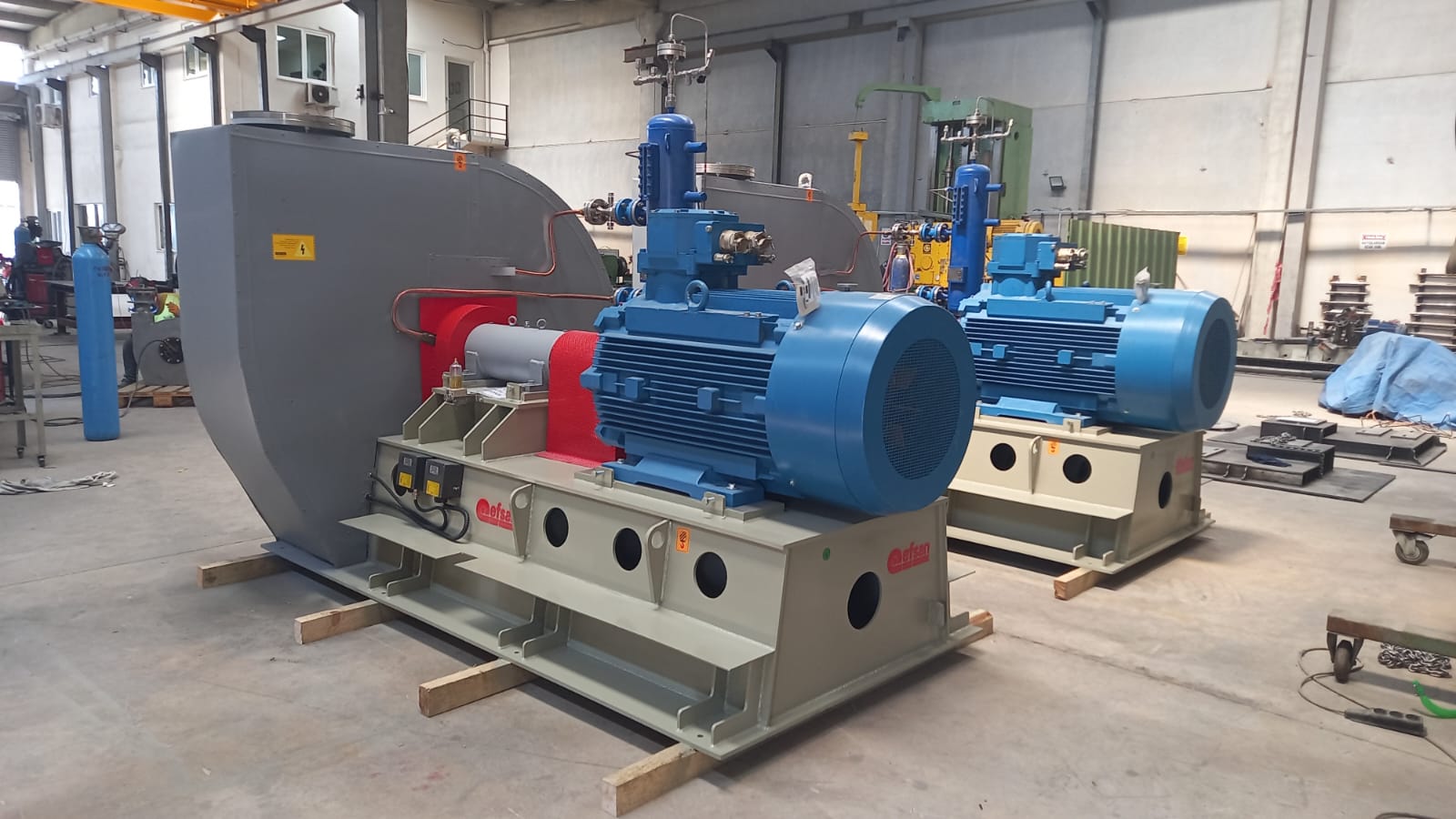
All Ex-proof fans manufactured by EFSAN MAKİNA are designed to comply with the ATEX protection type ‘h’ concept from a mechanical perspective. The selection of explosion-proof products must be considered as a whole. In this context, the mechanical protection class of the supplied explosion-proof radial fans is manufactured in accordance with the relevant standards, and it is of vital importance that the electrical components (electric motor, sensors, etc.) to be used in the equipment in question are also selected to have the appropriate zone class and ATEX protection type.
Otherwise, even if the mechanical equipment meets ATEX requirements, the selection of unsuitable electrical equipment may invalidate the product’s safety in explosive atmospheres and its ATEX compliance.
Temperature Classes and Gas Groups: The Devil is in the Details
The fact that a fan has an ATEX certificate does not mean that it can be used in your facility. Every letter in the ‘Ex d IIC T4’ designation is of vital importance.
Temperature Classes
This indicates the maximum temperature that the motor and body surface can reach. The ‘Auto-ignition Temperature’ of the gas in the environment must be higher than this value.
- T1 (Max 450°C): For gases with very high ignition temperatures.
- T3 (Max 200°C): Standard for many hydrocarbon fuels.
- T4 (Max 135°C): Required for more sensitive gases such as acetaldehyde and ethyl ether.
- T6 (Max 85°C): The safest class. Mandatory for gases such as sulphur (CS2) that can ignite even at 95°C.
Engineer’s Note: A T6 class fan can be used anywhere that requires T1-T2-T3-T4-T5. However, the reverse is not possible. To maintain a high safety margin, we at Efsan Makina generally recommend T3 and above classes.
Gas Groups
- IIA: Propane, acetone (Low-risk gases)
- IIB: Ethylene (Medium risk)
- IIC: Hydrogen, acetylene (Highest risk – Strictest sealing required)
Fan Types: Should Radial or Axial Fans Be Preferred?
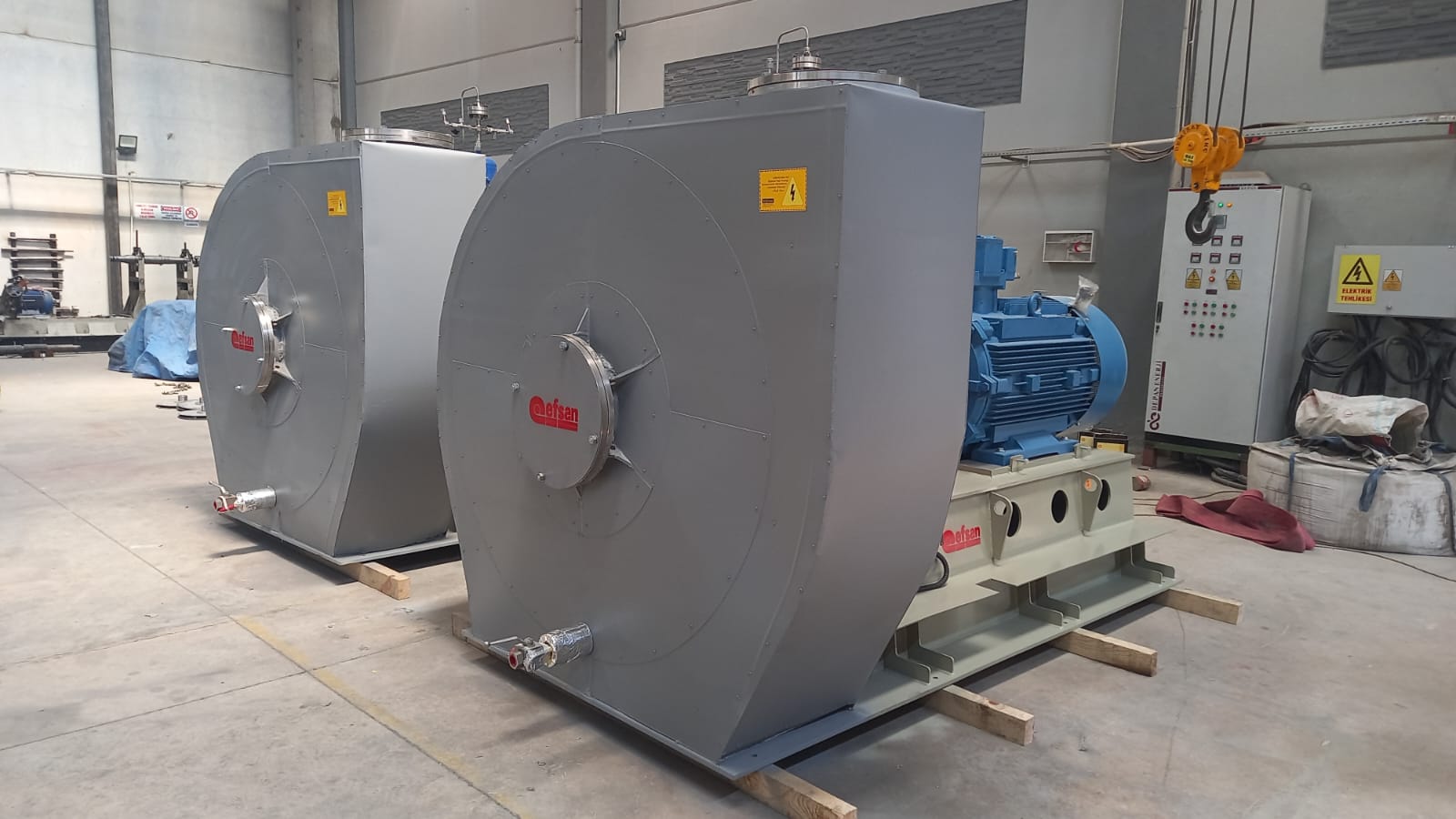
Fan type selection in explosion-proof applications is as important as motor selection. The wrong fan type can delay gas discharge and cause it to accumulate inside.
Explosion-Proof Axial Fans
These are propeller-type fans where air flows parallel to the shaft axis.
- Application: Areas requiring high flow rate and low pressure. Warehouse ventilation, paint shop ceiling fans.
- Advantage: Compact installation, can be mounted on walls or windows.
- Caution: If the duct system is long (high pressure loss), axial fans become inefficient and may cause the motor to overheat.
Exproof Radial (Snail) Fans
These are fans where air enters centrally and is expelled vertically by centrifugal force.
- Application: Processes requiring long ducts, filter systems, and high pressure.
- Advantage: Operates stably under harsh conditions, in dusty air, and at high back pressure.
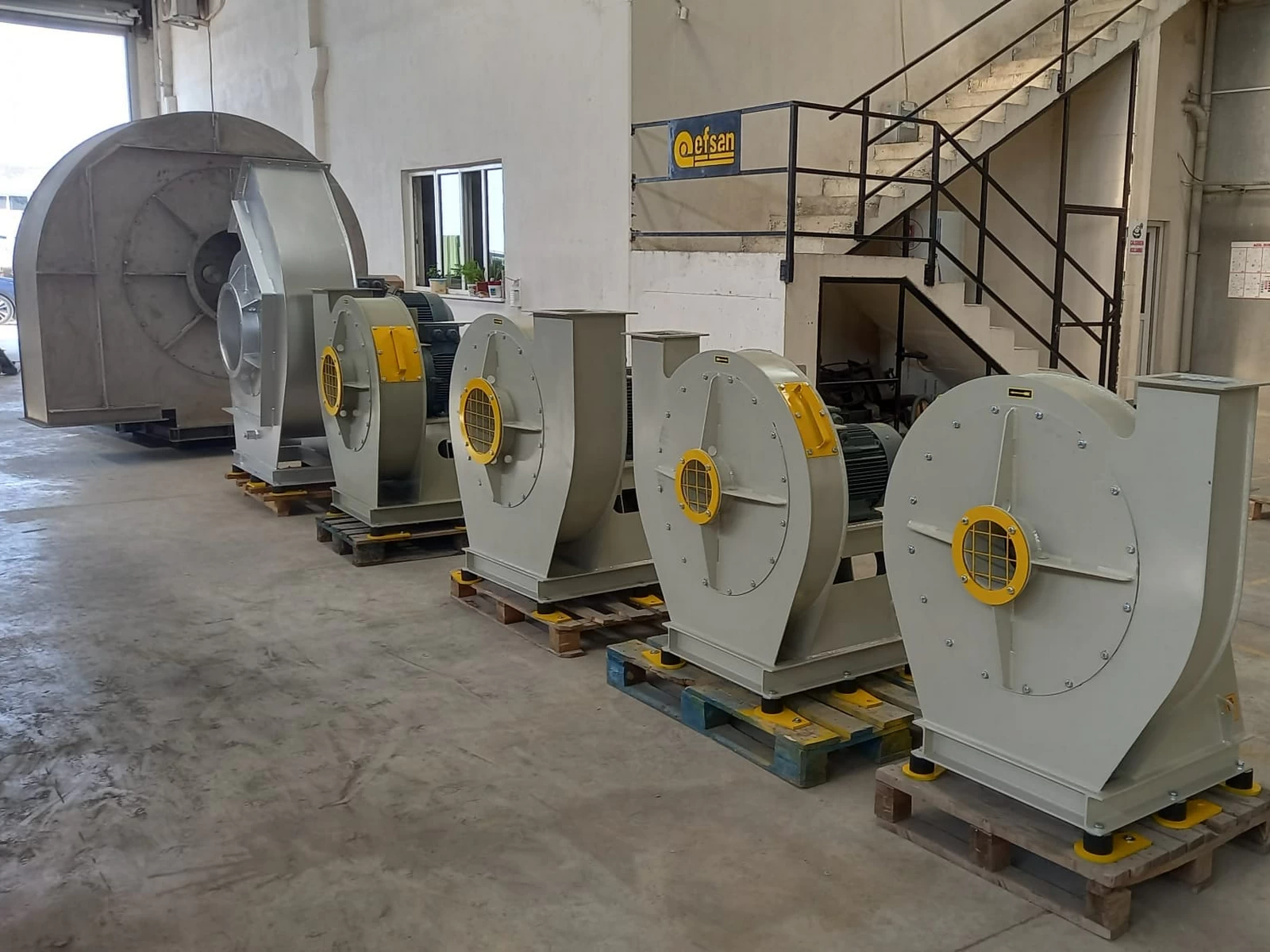
Efsan Difference: In Efsan Makina radial fans, the blade structure is designed to prevent dust accumulation (sparse blades or backward-curved blades), thereby minimising the risk of imbalance and vibration.
Motor Protection Types: The Difference Between Ex-d and Ex-e
One of the topics engineers most often confuse is motor protection type.
(Rich Formatting – Comparison Table)
| Feature | Ex-d (Flameproof) | Ex-e (Increased Safety) |
| Principle | An internal explosion may occur but will never propagate to the outside. The enclosure is pressure-resistant. | Additional measures are taken to prevent arcs or sparks from occurring. No internal explosion occurs. |
| Usage Area | Zone 1 and Zone 2 | Generally Zone 2 (Sometimes Zone 1) |
| Cost | Higher | More Economical |
| Safety Concept | Highest mechanical protection | High electrical safety |
A common situation encountered in the field is the use of Ex-e motors to reduce costs in Zone 1 environments. If gases in the IIC group (hydrogen, etc.) are present in the environment, the use of an Ex-d (d-type) enclosure is almost mandatory.
Assembly Errors and Maintenance: The Weakest Link in the Chain
Even if you purchase the world’s best explosion-proof fan, if it is installed incorrectly, it is no longer explosion-proof. With 30 years of experience, the most critical errors we have observed in the field are as follows:
- Use of Standard Glands: Fitting a standard plastic gland to the cable entry of an explosion-proof motor compromises all sealing. ATEX-certified, armoured cable glands must be used.
- Insufficient Grounding: Static electricity is the number one cause of dust explosions. The fan body and motor must be grounded separately.
- Use of a Frequency Inverter (Drive): If you are going to use a standard explosion-proof motor with a drive, the motor must be ‘drive compatible’ (PTC thermistor protected) and this must be specified in its certification. Otherwise, the motor cannot cool down at low speeds and the surface temperature exceeds the T class.
Efsan Machinery Quality Policy and Certification Processes
All explosion-proof fans manufactured and supplied by Efsan Makina are certified by internationally accredited organisations.
We apply the following processes to the products we offer our customers:
- Performance Tests: Verification of the required flow rate and pressure.
- Vibration Analysis: Balancing of the fan according to ISO 1940 standards (G2.5 or G6.3 class). This eliminates the risk of mechanical friction.
- Certification: The product is delivered complete with an ATEX certificate, motor test reports, user manual, and declaration of conformity.
When you work with us, you are not just purchasing a fan; you are acquiring a ‘safety package’ that will pass workplace safety inspector audits without issue and reduce your legal liabilities.
Conclusion: There is no room for compromise on safety
In industrial facilities, never say ‘it can’t happen.’ Investing in explosion-proof fans is one of the most strategic moves you can make for the sustainability of your business. Incorrect engineering calculations can lead to irreparable loss of life and property.
Don’t take risks; work with a partner whose expertise you can trust. Efsan Makina is with you every step of the way, from project design to commissioning. Contact our engineering team to determine the right Zone, the right Temperature Class, and the most efficient fan type for your facility’s needs.
Frequently Asked Questions
Question: If I fit an explosion-proof motor to a standard fan, will it become explosion-proof?
Answer: No. The fan’s inlet hood, impeller and body must be made of non-sparking material. Simply changing the motor does not ensure safety; on the contrary, it creates a false sense of security.
Question: How often should explosion-proof fans be maintained?
Answer: Although it varies depending on the risk level, especially in Zone 21/22 (Dust) environments, dust accumulation on the motor should be cleaned every 3 months and bearing vibration should be monitored regularly.
Are you looking for the safest solution for your process?
Don’t waste time. Contact Efsan Makina’s technical team immediately and take advantage of our free discovery and technical consultancy service tailored to your project.
tags :
More about the sector and our business