Table of Contents
Water is used as a direct process input at many stages of industrial production. Water used in sectors such as washing, cooling, chemical processes, surface treatments, food production, mining, pharmaceutical production and energy production turns into wastewater that carries different pollutants at the end of the process.
In an environment of increasing pressure on water resources, the approach is gradually changing. Wastewater is not only a waste that needs to be removed, but also a waste that can be recovered water and resource flow it is evaluated as. United Nations sources also consider wastewater reuse as an important approach that can reduce pressure on water resources.
This approach is more important, especially in industrial facilities. Because the wastewater generated in some processes has a high load in terms of salt, dissolved solids, oil, chemicals or other pollutants. Therefore, only biological or physicochemical treatment may not be sufficient. Further processes are required to reuse the wastewater or reduce liquid discharge as much as possible.
At this point evaporation, mechanical steam recompression (MVR) and Zero Liquid Discharge (ZLD) technologies come into play.
Why Is Wastewater Treatment Gaining More Importance?
In terms of industrial facilities, water management faces two different problems.
The first is to provide the water needed for production.
The second is the safe and economical management of wastewater generated after production.
These two problems are actually parts of the same cycle.
When water used in a facility is discharged without treatment, not only pollutants are sent to the environment. At the same time, the part of that water that can be used in the reproduction process is also lost.
Therefore, the goal in modern water management is only “treating wastewater” it is not Broader target;
use → purify → recover → reuse
it is to close the loop as much as possible.
The Zero Liquid Discharge approach is an advanced application of this idea. The purpose of ZLD is to eliminate liquid waste effluent to the extent technically and economically feasible and to restore the bulk of the water to the process. However, it cannot be said that ZLD is automatically the most suitable solution in every facility due to its energy consumption and investment cost. The system should be evaluated according to the composition of the wastewater and process conditions.
What is Wastewater Treatment?
Wastewater treatment is the process of separating the pollutants in water through physical, chemical, biological or thermal processes and bringing the water to the targeted use or discharge conditions.
The technology to be used varies depending on the character of the wastewater.
A typical industrial wastewater treatment line may have one or more of the following processes:
- Pre-filtration and solids separation
- Oil and emulsion removal
- pH regulation
- Coagulation and flocculation
- Chemical precipitation
- Ultrafiltration
- Nanofiltration
- Reverse Osmosis (RO)
- Ion exchange
- Activated carbon
- Evaporation
- Crystallization
The important thing here is that these processes are not considered as alternatives to each other.
For example, RO is an important cascade in many water recovery systems due to its low energy consumption. However, as the salinity of the feed water increases, the operating limits of membrane processes become apparent. In ZLD systems, RO is therefore often used in conjunction with a thermal concentration cascade. It is noted in the literature that RO is used before thermal processes to reduce brine volume in ZLD systems and that thermal concentration comes into play at high salinities.
Where is MVR Used in Wastewater Treatment?
MVR is not a replacement technology for the entire wastewater treatment system.
The basic task of MVR is to it is to reduce the energy need of the evaporation process by recovering the energy of the steam formed during evaporation.
For this reason, MVR becomes especially important in systems where the water in the wastewater must be thermally separated.
A simplified process can be thought of as follows:
Wastewater → Pretreatment → Evaporation → MVR → Distillate + Concentrate
If the system is part of a ZLD facility, the process can be moved further:
Wastewater → Pretreatment → RO → MVR Evaporation → Concentrate → Crystallization → Solid Product/Waste
In this structure, MVR is used to separate water, especially in high volumes, through evaporation in the concentration level it serves. Thus, a stream of smaller volume and higher concentration can be sent to the next crystallization or final concentration cascade. It is also stated in the ZLD literature that MVC/MVR brine concentrators are used for high water recovery and high salinity concentration.
What is MVR?
MVR is Mechanical Vapor Recompression.
The water vapor formed in the evaporator is compressed by a mechanical compressor rather than being sent to the atmosphere or condenser system. As a result of compression, the pressure and saturation temperature of the steam increase, and the resulting higher temperature steam is used again as the heat source of the evaporation process.
Thus, the latent heat contained in the vapor formed during evaporation is reused in the system.
The basic principle of MVR can be summed up in three steps:
Generate steam → compress steam → reuse heat.
Therefore, one of the main equipment of the MVR is not the evaporator, but it is a steam compressor.
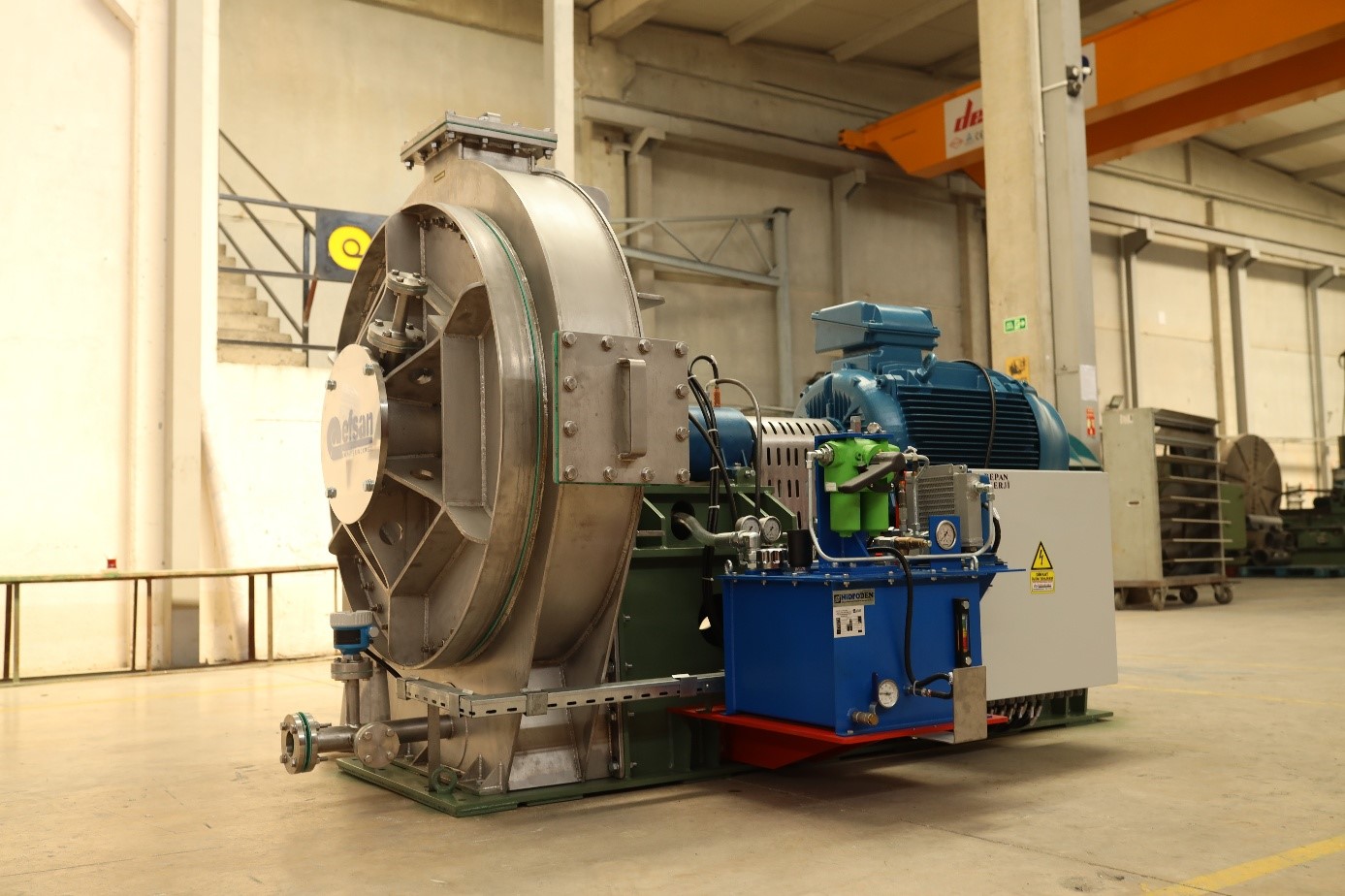
This article may interest you. MVR Application Areas: Industrial Efficiency and Zero Waste Conversion
How Does MVR Reduce Energy?
In a classical single-effect evaporation, energy is continuously supplied from outside to evaporate the water.
If the water evaporates and the thermal energy it carries is removed from the system, this energy cannot be reused.
In MVR, on the other hand, the energy of the steam formed is kept within the system.
Steam enters the compressor.
The compressor increases the pressure of the steam.
With the pressure increase, the saturation temperature of the steam rises.
The higher temperature compressed steam is sent to the heat exchanger and used to evaporate the liquid again.
Therefore, the energy required by the system from outside can be significantly reduced. In return, electrical energy is used mainly to drive the steam compressor.
But there’s one important engineering point here:
The energy consumption of the MVR does not depend solely on “how many tons of water are evaporated”.
The power needed by the compressor;
- steam flow rate,
- suction pressure,
- compressive pressure,
- pressure ratio,
- temperature increase,
- vapor density,
- pressure losses in the system
it is determined by parameters such as.
Therefore, the correct design of the MVR system does not only consist of determining the evaporator capacity.
Why is MVR Compressor the Critical Equipment of the System?
In the MVR system, the compressor is the equipment that provides the energy cycle of the process.
When the flow rate and properties of the steam coming out of the evaporator change, the operating point of the compressor also changes.
Especially in industrial wastewater, the following parameters can directly affect compressor design:
Vapor flow
It is the actual steam flow rate that the compressor must process.
Inlet pressure
Is the vapour pressure at the evaporator outlet.
Discharge pressure
It is the pressure that the compressor must provide to send steam to the heat exchanger.
Temperature lift
It is the temperature increase that the compressor must create.
Vapor density
The actual density of the steam directly affects the volumetric flow rate and aerodynamic design of the compressor.
Pressure ratio
It is the ratio of compressive pressure to suction pressure and is one of the critical parameters in determining the power needs of the compressor.
Therefore, the MVR compressor should not be considered like a standard fan. The choice of equipment should be made on the thermodynamic conditions of the process and the actual steam characteristics.
Salinity, Scaling and Fouling in Wastewater MVR Systems
One of the most important technical problems of MVR in wastewater treatment is not energy it is the physical difficulty of the process as the concentration increases.
As water leaves the system during evaporation, the dissolved substances concentrate.
This is especially the case:
- high TDS,
- chloride,
- sulfate,
- silica,
- calcium,
- magnesium,
- organic substances
it may increase the risk of scaling and fouling in currents containing it.
Excessive elevation of concentration can lead to precipitation on heat transfer surfaces, lowering the heat transfer coefficient and increasing the need for cleaning.
It is also at the center of the approach he developed to this problem in the MVR system fluidized cleaning particle system that ensures continuous cleaning of heat transfer surfaces it is found The company states that this structure aims to keep heat transfer performance more stable by controlling fouling and scaling formation.
Therefore, the goal in MVR design is not only to achieve maximum concentration.
More accurate approach:
maximum concentration + acceptable scaling risk + sustainable heat transfer + reliable compressor operation
to establish balance.
relationship Between MVR and ZLD
MVR and ZLD are not the same thing.
MVR is a process technology.
ZLD is a water management and process concept.
In a ZLD system, MVR can be used; however, MVR alone does not perform the entire ZLD.
A typical ZLD system can be structured as follows:
- Pre-treatment
Oil, suspended solids, organic load, or components that may adversely affect the MVR/evaporation process are reduced.
- Membrane Concentration
In suitable cases, a significant portion of the water is recovered and a smaller volume of concentrate is obtained through membrane processes such as RO.
- MVR Evaporation
Water in the concentrated stream is thermally separated. The resulting steam is compressed by the MVR compressor and used again as the heat source of the process.
- Final Concentration / Crystallization
The high concentration brine remaining after the MVR can be sent to the crystallizer or another final concentration cascade, depending on the process design.
- Water Recovery
If the resulting distillate meets the necessary quality requirements, it can be returned to the process water or subjected to additional polishing processes.
Therefore, MVR is a special feature of the ZLD system at the concentration stage, where a high volume of water must be separated by low energy it plays an important role.
In Which Wastewater Can MVR Be Used?
The type of wastewater in which MVR can be used is quite broad. However, it should not be considered that MVR can be applied directly to any wastewater.
The application should be evaluated according to the chemical composition of the effluent and the final concentration targeted.
The main application areas are:
Chemical Industry
Reducing the volume of highly concentrated wastewater generated in chemical production processes and recovering water.
Pharmaceutical Industry
Concentration and water recovery of complex wastewater from pharmaceutical processes.
Textile and Dye
Concentration and ZLD applications, especially in high salt paint and textile wastewater.
Metal Plating and Electroplating
Rinsing waters, coating processes and high TDS containing currents resulting from surface treatment.
Mining and Metallurgy
Process waters and brine streams with high mineral and salt concentrations.
Power Plants
In particular, MVR can be used in the concentration of effluents consisting of wet FGD processes. Scaling in these applications is a major design problem.
Food and Beverage
Concentration of process water, water recovery and thermal separation of wastewater streams with certain organic loads.
Palm Oil Processing
Palm Oil Mill Effluent (POME) is a complex process wastewater with high organic matter.
RO Reject and Brine
The high concentration reject current remaining after RO can be evaluated before or together with MVR, especially in ZLD systems where water recovery is desired to be increased.
Can MVR be Applied to Every Wastewater?
No.
The suitability of the MVR cannot be determined by looking at the flow rate alone.
Before designing an MVR system, at least the following information should be known:
- Wastewater flow rate
- Temp
- Pressure
- TDS
- Density
- pH
- Main ions and salts
- Organic content
- Oil and emulsion quantity
- Suspended solid matter
- Scaling potential
- Boiling point elevation
- Desired distillate quality
- The final desired concentration
- Working time
- Daily/weekly work profile
Especially boiling point elevation (BPE) It is important in MVR design.
As the concentration of the solution increases, the boiling temperature rises relative to pure water. This may affect the evaporation temperature and the temperature increase that the compressor must provide.
Therefore, the assumption that the same MVR compressor can be used for two different wastewaters with the same water flow rate is not correct.
How to Evaluate Energy Performance in MVR Systems?
The performance of MVR systems should not be evaluated solely on compressor engine power.
One important indicator is the electrical energy expended on a unit amount of recovered water.
For example:
Specific Energy Consumption = Compressor Power / Distillate Production
it can be evaluated as follows.
However, real system performance is not just about this value.
Heat exchangers, pumps, auxiliary equipment, pretreatment, condensers and final concentration stages should also be included in total energy consumption.
In addition, the economic advantage of MVR should be considered together with the costs of wastewater disposal.
As MKR emphasizes in industrial wastewater applications, continuous wastewater generation, high disposal cost and the need to recover process water are among the main conditions under which MVR becomes economically meaningful.
Compressor Selection in MVR Design
The choice of compressor, the heart of the MVR system, is not a simple function of evaporator capacity.
The following process points should be considered together when choosing a compressor:
Vapor flow: kg/h or m³/h
Suction pressure: KPa (a) or bar (a)
Discharge pressure: KPa (a) or bar (a)
Suction temperature: °C
Discharge temperature: °C
Pressure ratio: P₂/P₁
Temperature lift: ΔT
Vapor composition: Whether the steam is composed solely of water vapor
Vapor density: kg/m³
Moisture content: Risk of liquid droplets at the compressor inlet
At this point, the quality of the steam before it enters the compressor is especially important.
Transporting liquid droplets from the evaporator to the compressor can negatively impact compressor performance and mechanical reliability. Therefore, the evaporator–separator–mist eliminator–compressor connection should be designed as a whole. This is why the use of mist eliminator before compressor in MVR systems is particularly emphasized in technical sources.
Conclusion: Evaluating Wastewater as a Resource, Not as Waste
Water scarcity is not just a problem of finding more water.
Equally important is how the water used is managed after the process.
Using high amounts of water in industrial facilities and creating wastewater with high salt and pollutant loads in return reveals the limits of the classical “use and discharge” approach.
The modern approach is different:
Using less clean water.
Purifying used water.
Reclaiming water.
Reducing concentration.
Eliminating liquid discharge when necessary.
MVR does not solve this entire cycle by itself. However, it can undertake an important task by reusing the energy of the steam formed in evaporation, especially at the point where high-volume industrial wastewater must be thermally concentrated.
In a correctly designed system pretreatment, RO or other concentration technologies, MVR evaporation, crystallization and water recovery they become complementary processes.
The success of the MVR is therefore not determined by choosing only “a high-efficiency compressor”.
Actual performance;
wastewater characterization + evaporation conditions + boiling point elevation + scaling/fouling control + heat transfer + compressor design + energy consumption + target water quality
it depends on the engineering balance between.
The main value of MVR, especially in high TDS industrial wastewater and ZLD applications, is not just evaporating water to achieve high volume water recovery with a more manageable energy need by reusing the energy generated during evaporation in the process.
Frequently asked questions
At what process stage is MVR used in wastewater treatment systems?
MVR is generally used after pretreatment and membrane processes, in the evaporation stage, where wastewater is thermally concentrated. In particular, RO reject can be integrated into the evaporation process in order to achieve higher water recovery in high TDS process waters and ZLD applications.
Why is pressure ratio important in the MVR system?
Pressure ratio is the ratio of the pressing pressure of the compressor to the suction pressure. This value directly affects the pressure increase that the compressor must create and therefore the power requirement. As the concentration of wastewater and boiling point elevation increase, the required compression duty may also change.
How do high TDS wastewater affect MVR design?
High TDS can raise the boiling temperature of the solution and increase the risk of scaling during evaporation. As the boiling point elevation increases, a higher temperature difference may be required to ensure the same heat transfer. This can affect the pressure ratio, power requirement and operating conditions of the MVR compressor.
Why are scaling and fouling important in MVR systems?
As water is removed during evaporation, dissolved salts and other components concentrate. Precipitation of heat transfer surfaces may occur if solubility limits are exceeded. Scaling and fouling can reduce the heat transfer coefficient, resulting in loss of capacity, higher energy consumption and the need for more frequent cleaning.
Why should fluid transport to the MVR compressor be prevented?
MVR compressors are mainly designed to process the vapor phase. The presence of liquid droplets in the steam leaving the evaporator can negatively affect the aerodynamic performance and mechanical reliability of the compressor. For this reason, separator and mist elimination systems are as important parts of process design as compressor selection.
Can MVR and RO be used together?
Yes. MVR and RO do not have to be alternatives to each other in most ZLD applications. RO can recover most of the water in the feedwater with lower energy consumption under favorable conditions. If the high concentration reject remaining after RO can be sent to the MVR evaporation system, further water recovery can be achieved.
What is the main difference between MVR and ZLD?
MVR one it is a thermal energy recovery and evaporation technology. ZLD is an integrated process approach that aims to eliminate liquid waste discharge from the facility as much as possible. The MVR can act as one of the evaporation or concentration cascades of the ZLD system.
How much water can be recovered from wastewater with MVR?
It is not correct to give a fixed recovery rate. The amount of water that can be recovered; It depends on the TDS and chemical composition of the wastewater, scaling tendency, evaporator type, targeted final concentration, distillate quality and the process design of the system.
How is the energy consumption of the MVR system calculated?
The energy performance of the MVR system should not be evaluated solely on engine power. Compressor power, distillate flow rate, consumption of auxiliary equipment and the total electrical need of the process should be evaluated together. One common indicator is specific energy consumption per unit amount of recovered water:
SEC = Total Electricity Consumption / Amount of Distillate Recovered
What wastewater analyzes are required for the MVR system?
It is generally not sufficient to know only the flow rate and TDS values before the process design. At least parameters such as temperature, pH, density, TDS, major ions, chloride, sulphate, silica, calcium, magnesium, suspended solids, organic load and oil/emulsion content should be evaluated. The potential for scaling and fouling should also be examined separately.
Is MVR suitable for every industrial wastewater?
No. The applicability of MVR depends on the character, flow rate, concentration, thermal properties of the wastewater and the targeted water recovery rate. The process design should be modified accordingly, especially if there are pollutants that may pose a risk for high organic load, foaming, volatile components, high scaling potential or compressor.
Can distillate be reused directly in the MVR system?
Not always. The point of reuse of the distillate depends on the water quality required by the process. The distillate obtained after evaporation may need to be checked for conductivity, COD, volatile components or other specific contaminants. Polishing or additional purification stages can be applied when necessary.
How is the economic suitability of MVR investment evaluated?
The economic feasibility of MVR should not be assessed solely at the initial investment cost. Electricity consumption, current steam or thermal energy cost, wastewater disposal cost, economic value of recovered water, operating time, maintenance need and targeted water recovery rate should be evaluated together.
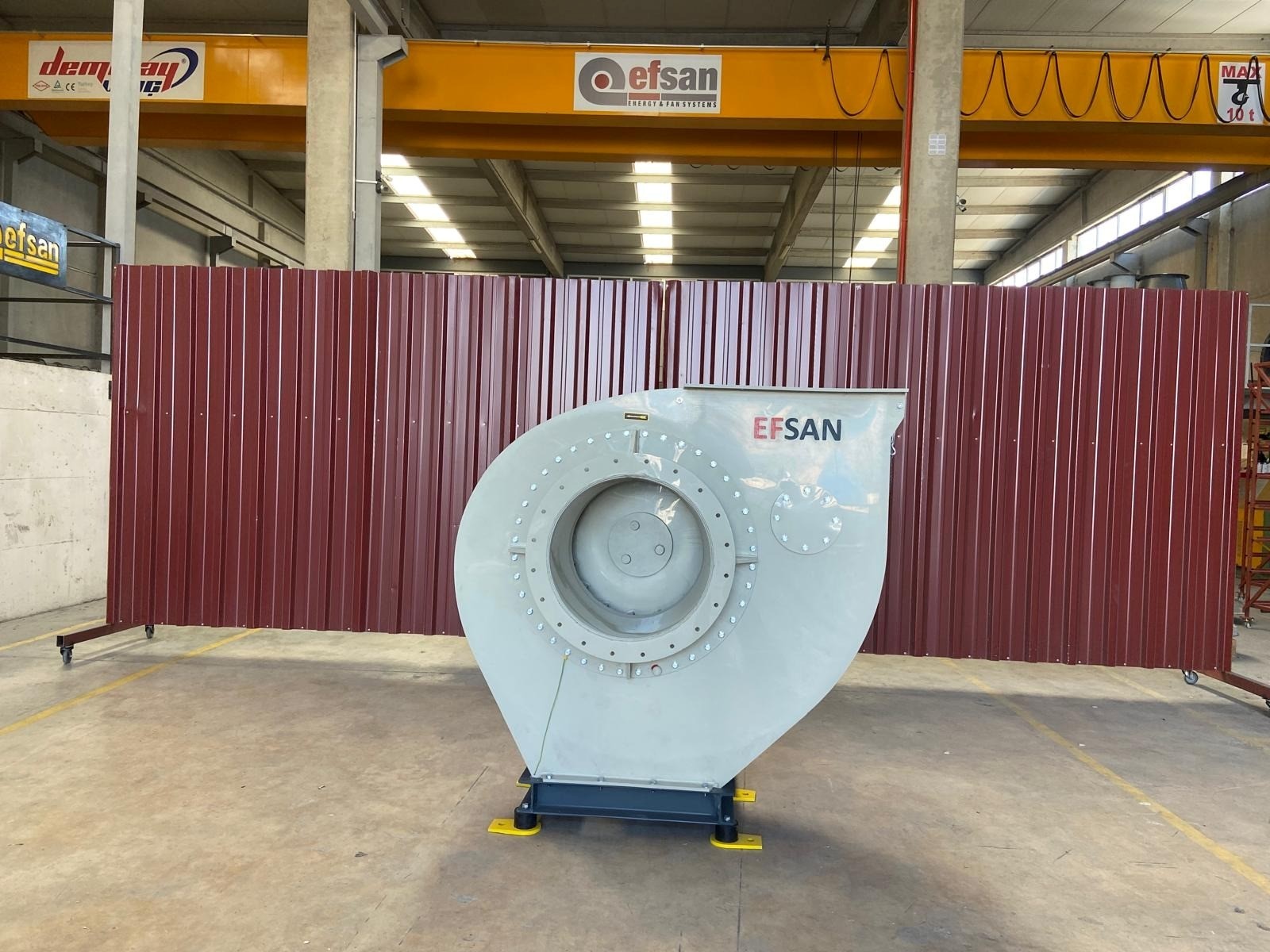
Incorrect equipment selection in MVR systems can cause the entire process to stop, not just energy loss. For wastewater characterization specific to your facility, thermodynamic calculations and accurate MVR radial fan selection Efsan Contact ’’s expert engineering team immediately.
tags :
More about the sector and our business