
Table of Contents
The inability of a newly installed or operating centrifugal fan for many years to provide the expected flow rate and pressure is one of the most common problems encountered in industrial facilities. This not only reduces production capacity; It can also cause increased energy consumption, disruption of process balance and unexpected investment costs.
In this article, available radial fan we will discuss why your fan cannot deliver the expected performance, the most common errors we encounter in the field, and the critical points to consider when purchasing a new fan.
If you are reading this article, your fan is probably not performing as you expected or you are trying to make the right decision before investing in a new fan, you are in the right place.
However, we would like to point out this at the beginning. It is not possible to solve every fan problem with a single blog post. Every system; It should be evaluated differently according to process conditions, gas properties, facility layout and operating conditions. Therefore, it is not possible for us to share all engineering calculations or field experiences here.
Despite this, we will share with you the most common errors and the root causes of performance problems, based on the field experience we have gained over the years. All of the examples in this article are based on practices we encountered in real projects and experienced personally.
If at the end of the article you are still unsure exactly what caused the problem in your own system, this is quite normal. Because many performance problems are not only solved by examining the fan; Process data can be analyzed accurately by evaluating system resistance and operating conditions together.
To date, we have solved similar problems in chemical, petrochemical, cement, food, salt production and many different industries. If requested, we will be happy to share with you our references and technical experiences of similar applications.
Fan Does Not Provide Expected Flow and Pressure
This is one of the most frequently submitted requests to our technical team. We frequently encounter feedback such as “My fan does not provide sufficient flow rate.”, “The fan does not produce pressure.”, “The fan does not show the performance we expect.” or “The newly installed fan does not reach the desired values.”.
In such cases, the first thing that comes to mind is the idea that the fan was produced incorrectly. However, our field experience shows that a significant part of the performance problems are not caused by the fan itself; It is caused by the process data or application conditions used in fan selection.
Therefore, it would be useful to consider the issue under two basic headings in order to correctly identify the source of the problem.
Is Shared Process Data Accurate for Fan Selection?
Centrifugal fan one of the most common reasons why it cannot reach the expected flow rate and pressure is that the process data used in fan selection is incomplete or incorrect. Fan manufacturer; It selects according to flow rate, pressure, gas temperature, gas density and other process data. Therefore, even a small error in the information provided at the beginning can completely change the operating point of the fan.
Another situation we frequently encounter in the field is when an existing fan is requested with only reference to its diameter, engine power or speed. “We want the same fan as the existing fan.” approach does not always give accurate results. Because even if the two systems look similar from the outside, process conditions, system resistance and operating conditions may be different from each other.
Was the Fan Really Built to Ordered Performance Values?
When touching on this issue, we would like to point out that our aim is not to criticize any manufacturer. However, from time to time in the field, we may encounter fans operating at different performance values than those ordered.
Therefore, when receiving a new fan, it is important to verify the basic technical values specified in the order, such as flow rate, pressure, engine power and operating speed. In critical applications, verification of the fan’s performance should be requested, if possible.
Verifying that the fan produced can actually deliver these values is as important a part of a successful investment as choosing the right fan with the right process data.
The Fan Was Seamless When It Was First Commissioned, But Over Time It Started to Create Severe Vibration
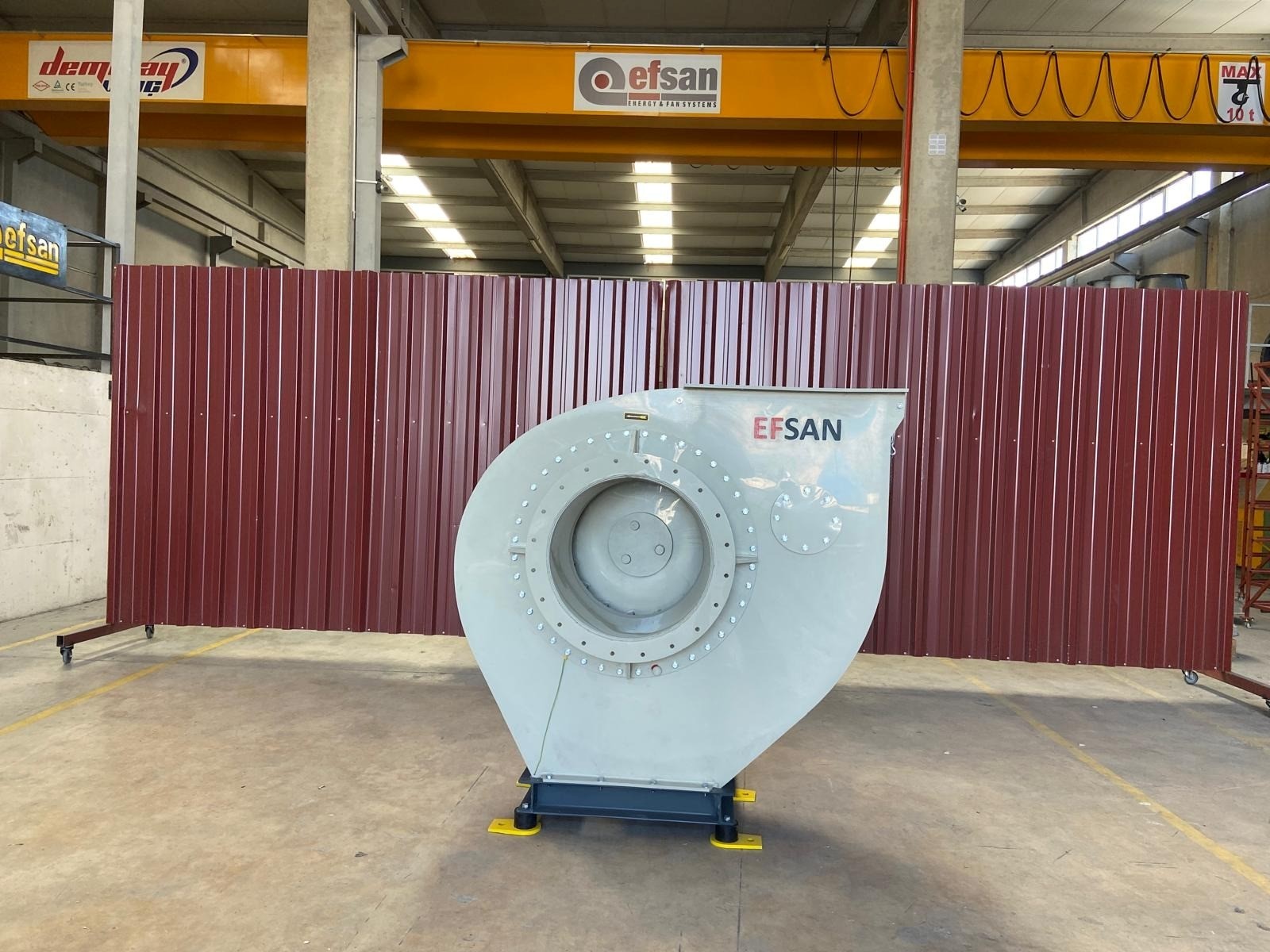
This article may interest you. Industrial Radial Fan Manufacturer | Custom Fan and Blower Solutions for Process Systems | Efsan Makina
This is one of the second most common problems we face on the field. If your fan works without vibration when it is first activated, but the vibration level gradually increases over time, the problem must be evaluated technically.
Cause of vibration; It may be caused by many different reasons such as design error, faulty material selection, balance deterioration, impeller contamination (fouling), wear, bearing problems or faulty installation during maintenance. Maintenance-related assembly or alignment errors can usually be fixed in a short time. However, problems caused by design, material selection or fan selection that are not suitable for the application cannot be completely eliminated with temporary interventions.
In the cases we have encountered on many occasions in the field, different technical interventions have been made in order to reduce vibration and the problem has been temporarily brought under control. However, since the root cause was not eliminated, the same malfunction repeated; Unplanned downtime, production losses and maintenance costs have reached much higher levels over time. In fact, in some facilities, we have witnessed many times that the maintenance and overhaul costs over the years have exceeded the investment of a new and correctly selected fan.
Therefore, vibration is not a malfunction but a symptom of a larger underlying problem. For a permanent solution, the root cause must first be analyzed correctly and it must be evaluated whether the existing fan can work reliably with the revision; If necessary, a new fan suitable for the application must be designed.
Constant Contamination (Fouling) Occurs in the Fan Wheel and Requires Frequent Cleaning
Fouling on the fan wheel is one of the most important causes of performance degradation in radial fans. Dust, particles or process-related residues accumulated on the impeller surface over time; It may disrupt the aerodynamic structure of the fan, causing a decrease in flow rate and pressure, an increase in energy consumption and a deterioration in the rotor balance.
In such problems, the following two questions must first be answered:
Have the properties of the transported material or gas been fully shared with the fan manufacturer?
If the fan manufacturer has not been informed that the material to be transported is a fluid containing adhesive, fibrous, abrasive or dense dust, a standard fan selection may have been made. In this case, contamination can be largely due to incomplete sharing of process data.
Does contamination continue despite sharing all process data?
If the fan is contaminated in a short time and requires constant cleaning, even though all operating conditions have been fully communicated to the fan manufacturer, then the suitability of the fan design for application should be re-evaluated. Design parameters such as impeller geometry, blade structure, circumferential speed, and operating point are critical in such applications.
A fan that requires constant cleaning not only increases maintenance costs; It can also cause unplanned downtime, production losses, and larger mechanical problems over time. Therefore, instead of merely cleaning the fan, the root cause of contamination should be identified and the permanent solution established accordingly.
The Fan Does Not Exceed a Certain Speed
Failure of the fan to exceed a certain rpm is one of the important performance problems we face in the field. Although the initial suspicion in this case is usually directed at the motor or frequency converter, the source of the problem is not always electrical.
First of all, the engine, driver (VFD) and control system should be examined; RPM limitation, frequency settings and nominal operating values of the engine should be verified. If there is no problem with these controls, the operating point and mechanical condition of the fan should be evaluated in detail.
In many applications we encounter in the field; Due to wrong fan selection, higher than expected system resistance, excessive power draw of the fan or mechanical problems, the engine reaches its safe operating limit and the fan cannot produce the desired circuit.
Critical turnover (critical speed) calculation is made incorrectly or not taken into account at all this may cause the fan to fail to operate safely at the desired speed. In this case, the fan may create excessive vibration within a certain speed range or may not be able to reach higher speeds due to safe operating limits. Critical speed analysis, especially in high speed and large diameter radial fans, is one of the most important stages of design.
In such cases, the solution is not to replace the engine with a larger engine or increase driver limits. First of all, it should be technically analyzed why the fan cannot reach the desired circuit and the root cause should be determined. Workarounds implemented without proper diagnosis can lead to greater mechanical failures and unnecessary investment costs down the road.
Fan Does Not Work for the Expected Life and Requires Frequent Maintenance
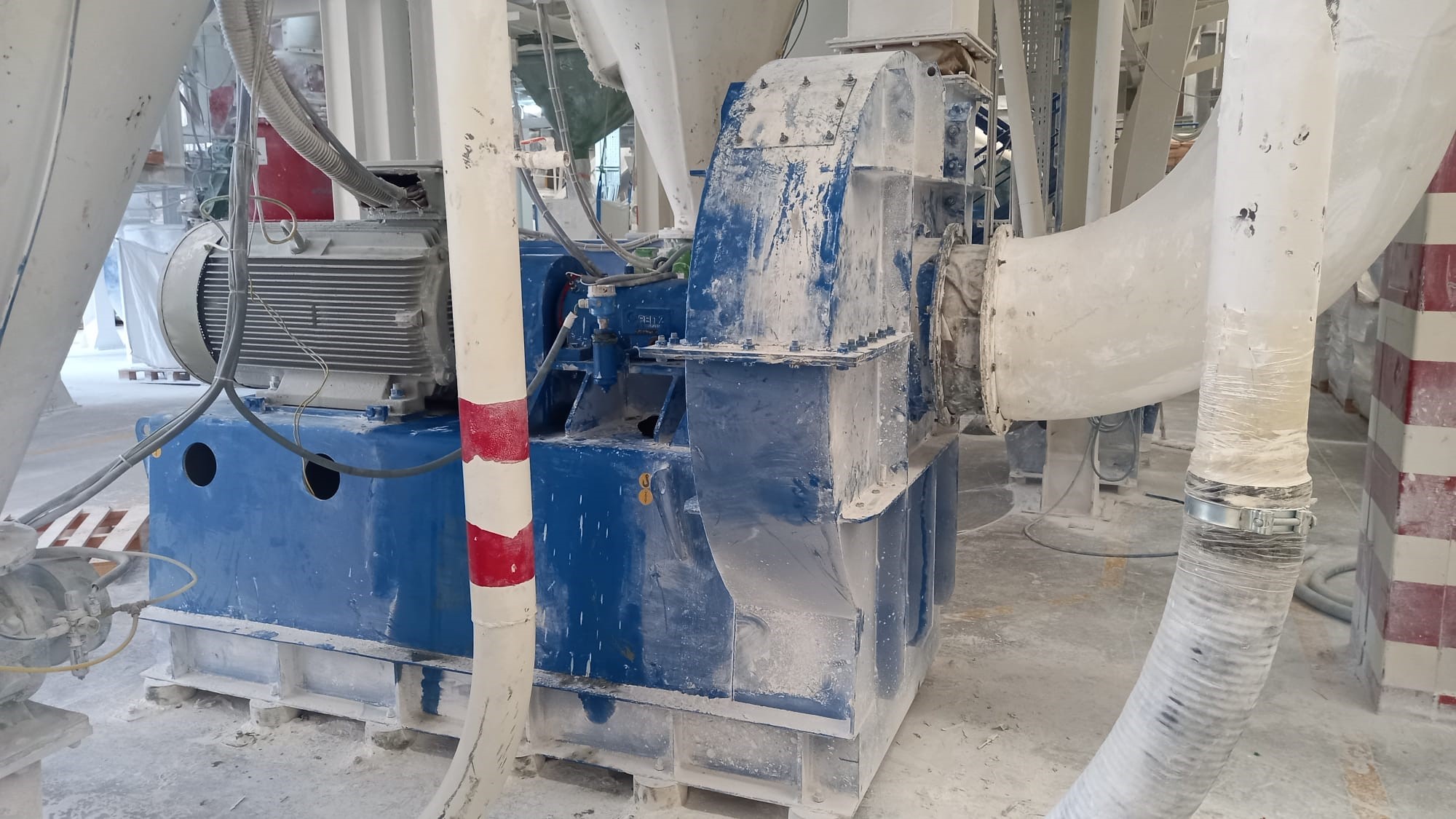
A correctly designed and application-appropriate radial fan must operate reliably for many years. If your fan requires constant bearing replacement, balancing, welding repair or unplanned maintenance, this should not be considered a normal operating cost.
We see the same malfunctions recurring for years in many facilities in the field. Although the problem is temporarily resolved, the fan malfunctions again at regular intervals because the root cause is not eliminated; Maintenance costs, unplanned downtime and production losses are increasing.
Therefore, first of all, in fans that constantly malfunction a detailed vibration analysis and the root cause of the problem should be determined by conducting a technical examination. Only as a result of this analysis can it be properly evaluated whether the revision will be sufficient or whether the fan needs to be redesigned.
It should not be forgotten that a fan is preferred with a low initial investment cost but requires constant maintenance total Cost of Ownership (Total Cost of Ownership), often exceeds the cost of a quality fan designed with the right engineering.
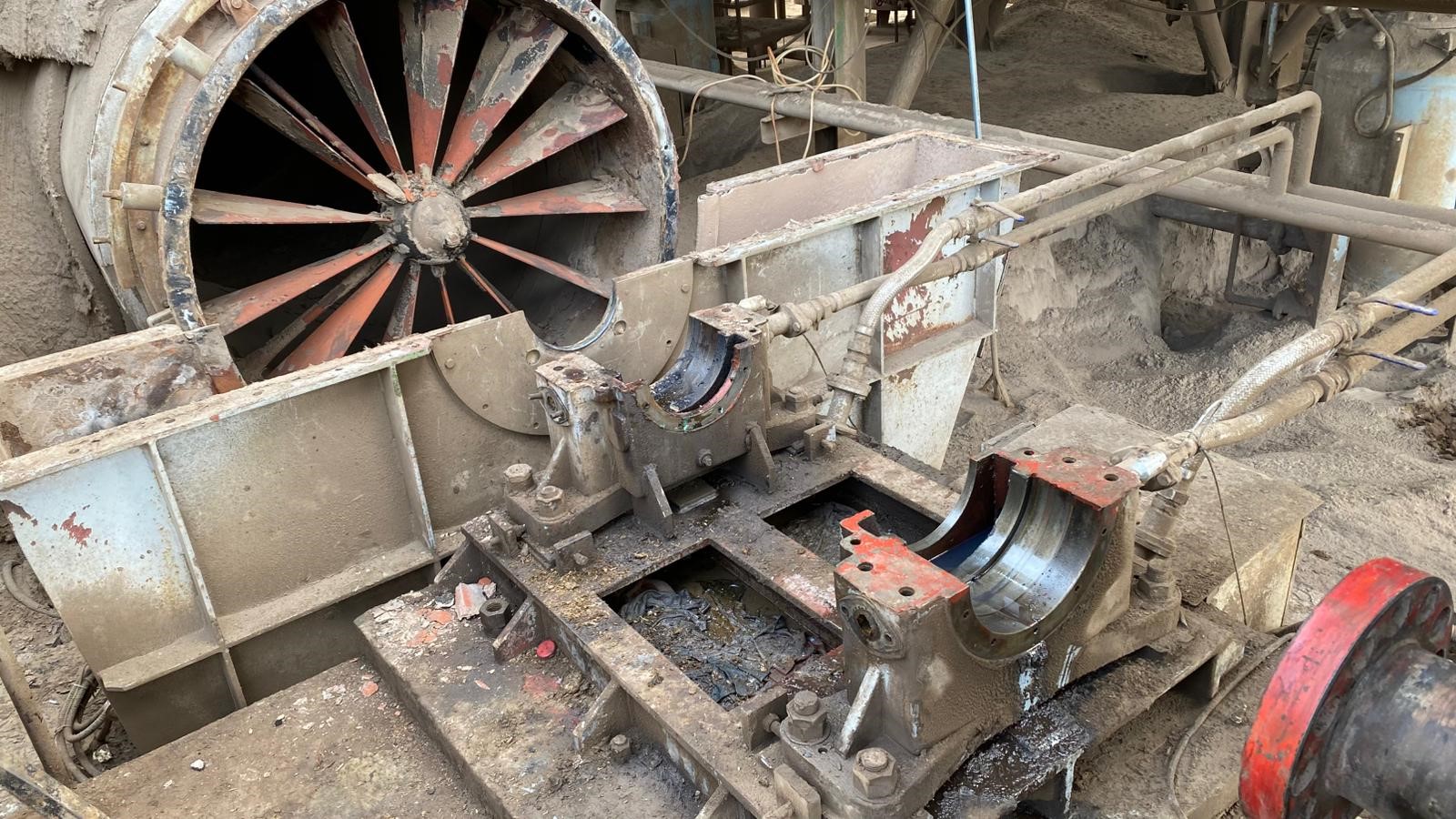
Why Does Fan Constantly Fail Bearing?
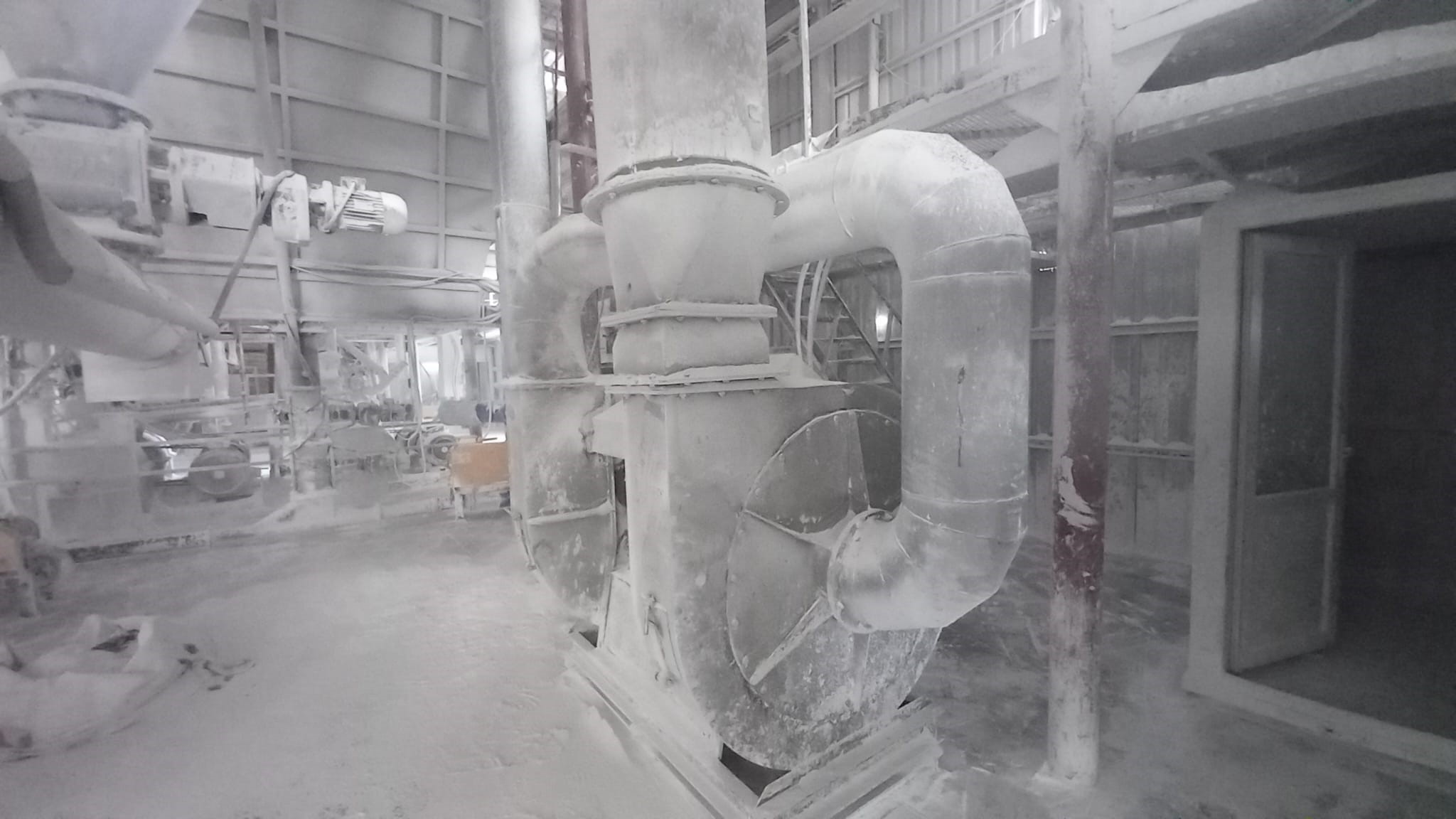
Bearing failures are one of the most common mechanical problems in radial fans. However, if the same bearing fails again at regular intervals, it is often indicative of a different underlying problem rather than the bearing.
High vibration, rotor unbalance, shaft or coupling misalignment, excessive radial loads, insufficient or faulty lubrication, incorrect installation and fan design not suitable for operating conditions can seriously shorten bearing life.
We witness that the same bearing is changed many times in many businesses in the field. However, simply replacing the bearing without determining the root cause temporarily eliminates the problem. Soon the same malfunction recurs and maintenance costs gradually increase.
Therefore, if a continuous bearing failure occurs, detailed vibration analysis should first be performed, rotor balance, shaft alignment, operating conditions and mechanical design of the fan should be evaluated together. Accurate diagnosis is the most effective way to avoid unnecessary maintenance costs and extend fan life.
The Most Common Problems in Fan Rotors
The rotor is one of the most critical components that directly affects the performance and operating life of the radial fan. Rotor-related problems are at the root of many mechanical failures we encounter in the field. The most common problems we encounter are the constant need for balance, wing wear and cracks on the wheel.
Fan Always Requires Balance
It is not normal for a fan to require constant balancing at regular intervals. Disturbance of balance; It may be caused by materials accumulated on the rotor, irregular wear, mechanical deformations or different problems causing vibration. Instead of constantly balancing, the root cause that disrupts the balance must be investigated.
Fan Blades Wear Out Rapidly
Incorrect material selection, especially in applications carrying corrosive dust, granules or particles, can significantly shorten fan life. If your process contains abrasive materials, the fan design should be made accordingly; Wear-resistant materials, appropriate impeller geometry or necessary protective measures should be evaluated at the design stage.
Cracks Form on the Fan Wheel
Cracks that form on the wheel often cannot be permanently resolved by repairing them with welding alone. Many factors such as high vibration, fatigue (fatigue), critical speed, resonance, faulty mechanical design or operating conditions can cause crack formation. Therefore, eliminating the root cause of the crack, not the crack itself, is the best approach for a long-lasting and safe business.
Conclusion
The topics we cover in this article are just one part of the fan problems we most often encounter in the field. Since the operating conditions, process and operating conditions of each fan are different, it is not possible to offer a single correct solution to every problem.
Our experience in the field shows that; Most performance losses, high vibration, frequent maintenance needs or mechanical malfunctions can be permanently resolved when accurate analysis is performed. The important thing for this is to focus on the root cause of the malfunction, not its outcome.
If your fan is not performing as expected, constantly malfunctions, or you are planning a new fan investment, having a technical evaluation before making a decision can prevent significant costs in the long run.
Efsan Machine as, with our engineering and field experience we have gained in different sectors over the years, we not only produce new fans; We also provide support in performance analysis, technical evaluation, revision and application-appropriate fan design of existing fans.
If you share your problem with us, we can determine the most accurate solution together by technically evaluating your process data.
Don’t let fan problems in your facility slow down your production!
Performance losses or recurring mechanical failures in your radial fan threaten not only your maintenance budget but your entire facility efficiency. Instead of wasting time on temporary repairs, let’s find the root cause.
Efsan MachineTake steps now to analyze your system, revise your existing fan, or discuss the new fan design that best suits your process with ‘’s expert engineering team.
Frequently Asked Questions (FAQ)
1. Why doesn’t the fan provide the expected flow rate and pressure?
The most common reasons for this are; faulty process data, wrong fan selection, system resistance is higher than expected, the fan does not work at design speed or working conditions change over time.
2.Can Operation Continue When High Vibration Is Detected in the Fan?
First, the permissible vibration limits specified in the fan manufacturer’s user manual should be checked. In addition, vibration values accepted in ISO standards should also be taken into account. If the measured vibration values are within these limits, operation can continue in accordance with the fan manufacturer’s recommendations. However, if the vibration values are above the permissible limits, the fan should be stopped as soon as possible and a technical inspection should be carried out.
3. If the fan constantly requires balancing, what is the reason?
Continuous balancing need; It may indicate rotor contamination, uneven wear, mechanical deformation, resonance or different mechanical problems. The root cause should be investigated rather than rebalancing.
4. If a crack occurs in the fan wheel, is welding sufficient?
No. Weld repairs without determining why the crack occurred often provide a temporary solution and the same problem may recur.
5. Why do fan blades wear out?
Abrasive particles, high flow rates, wrong material selection or fan design not suitable for application are the main causes of blade wear.
6. Is continuous bearing replacement normal?
No. Continuous bearing failure of the same fan at regular intervals is often a symptom of vibration, misalignment, balance problem or different mechanical problems.
7. Why doesn’t the fan rise above a certain speed?
In addition to engine or driver settings, high system resistance, wrong fan selection, critical speed, excessive power requirement or mechanical problems may cause this situation.
8. What information should be shared when purchasing a new fan?
Flow rate, pressure, gas temperature, gas density, properties of the transported fluid, particle status, operating time and process conditions must be shared for correct fan selection.
9. What is the best solution for fan malfunctions?
First, the root cause of the malfunction must be determined. Temporary repairs can provide a short-term solution, but technical analysis is the best approach for permanent and reliable operation.
10. Can my existing fan be revised or should I buy a new fan?
There is no single answer to this question. The mechanical condition of the fan, the operating conditions, the root cause of the failure and the process requirements must be evaluated together. While revision is sufficient in some applications, in some cases a new fan designed for the application may offer a much more economical and reliable solution in the long run.
tags :
More about the sector and our business